Does anyone live on Easter Island?
Yes. One town, a living Polynesian culture, and the community that runs the park. Who lives on Rapa Nui, what they speak, and where your money goes.
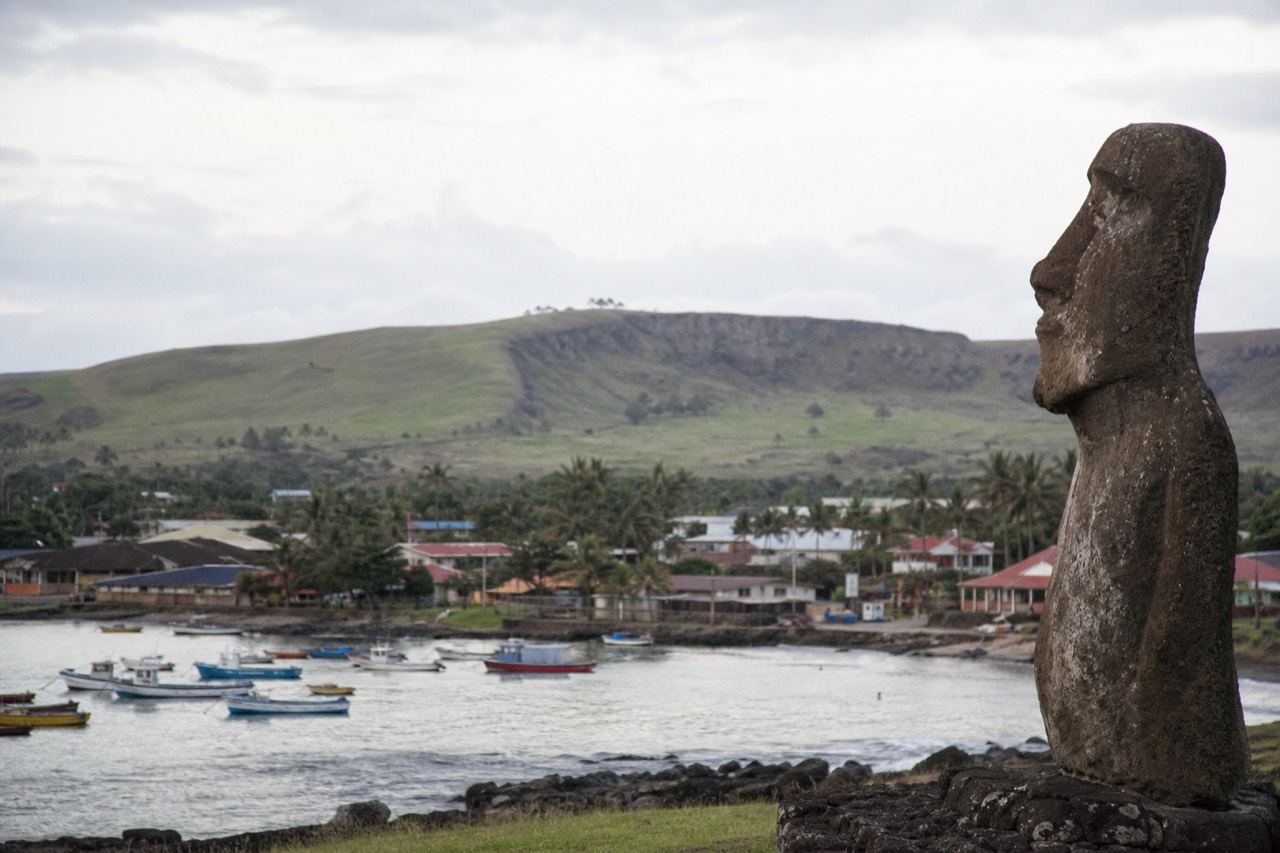
Fishing boats knock against each other in the harbour at Hanga Roa most mornings, and by mid-morning the tuna is on restaurant menus a few hundred metres up the road. Children walk to school. There is a hospital, two banks, a football pitch, and a queue at the bakery. The question in the search box is a fair one, because the photographs never show any of this, but the answer is unambiguous.
People live here. They have lived here since the first Polynesian canoes arrived, and their descendants now run the park that everybody flies in to see.
Who lives on Rapa Nui today?
The Rapa Nui people, alongside mainland Chileans and a small international community, almost all of them in Hanga Roa. The island's indigenous community, Ma'u Henua, counts 2,500 members and 280 workers, making it one of the largest indigenous communities in Chile. No current official census figure is published often enough to quote reliably, so treat any precise number you see online with suspicion.
Hanga Roa is the whole urban story. It holds the airport, the harbour, the shops, the guesthouses and effectively all of the housing, because the national park covers a large share of the island and nobody lives inside it. Everything on a tour itinerary, from the quarry at Rano Raraku to the beach at Anakena, is a drive out from that one town and a drive back.
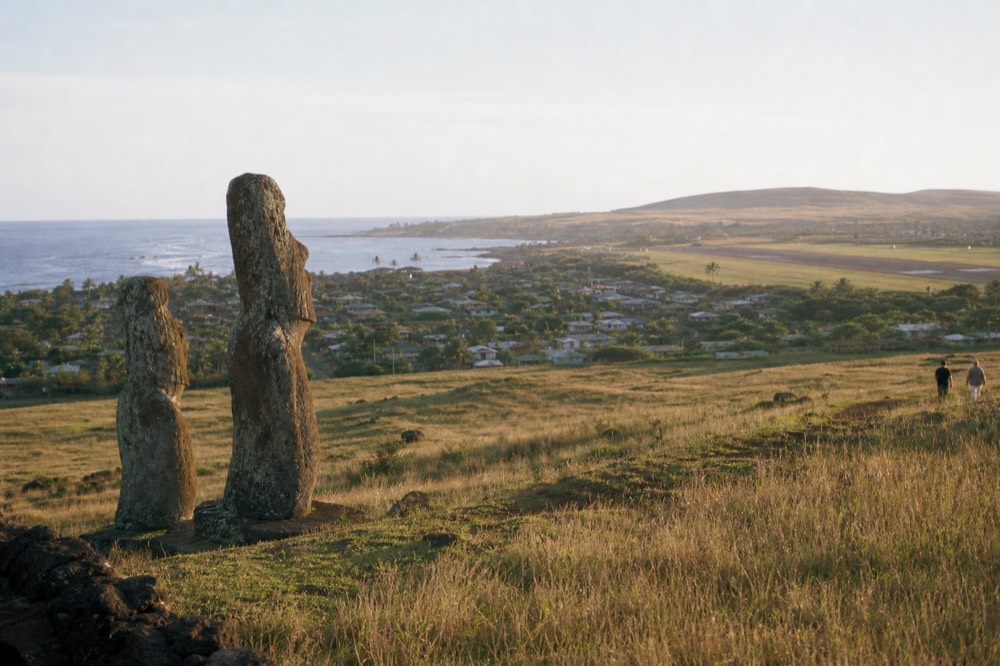
That concentration explains a lot of practical things visitors find strange. Every tour departs from a Hanga Roa hotel pickup. Every restaurant is walkable from every other restaurant. And where you stay on the island is less a question of neighbourhood than of which street in one small town, which is why the lodging pages read so differently from anywhere else in Chile.
Is Easter Island part of Chile?
Yes. Rapa Nui has been Chilean territory since annexation in 1888 and is governed as a special territory with its own entry rules. Since 23 November 2017 the national park has been administered by the Ma'u Henua indigenous community under a 50-year concession, approved in an indigenous consultation in which more than 86% of the Rapa Nui people voted in favour.
The special-territory status is the part that touches your trip. Under Law 21.070, every visitor completes the Formulario Único de Ingreso, including Chileans, and tourist stays are capped at 30 days. You need a return ticket that cannot be transferred and either a booking with accommodation registered with Sernatur or an invitation letter. The Chilean government publishes the entry rules for the island in English, and none of it is a visa: it is a residency-control system for an island that cannot absorb unlimited arrivals.
The park handover in 2017 was the bigger shift. Before it, the archaeological heart of the island was run from the mainland. Now the community that descends from the people who carved the moai sets the rules at the sites, accredits the guides, and collects the ticket revenue. That is unusual anywhere in the world, and it is the reason the visiting rules feel stricter here than at comparable UNESCO World Heritage sites.
What language do people speak?
Spanish is the official language and the one you will hear most in shops and offices. Rapa Nui, the ancestral Polynesian language, is the cultural language and is still in daily use. English is widely spoken across the tourism trade, and French turns up often enough to be worth mentioning because of the visitor mix.
You meet the Rapa Nui language before you meet anyone who speaks it. The park's own signage greets arrivals with Iorana and thanks them with Māuru-uru. Place names are almost all Rapa Nui: ahu for a ceremonial platform, rano for a crater, ana for a cave, motu for an islet, moai for the statues themselves. Anyone who has spent time in Hawaii, Tahiti or Aotearoa will start recognising the shape of the words within a day, which is the reason the language kinship question comes up so often.
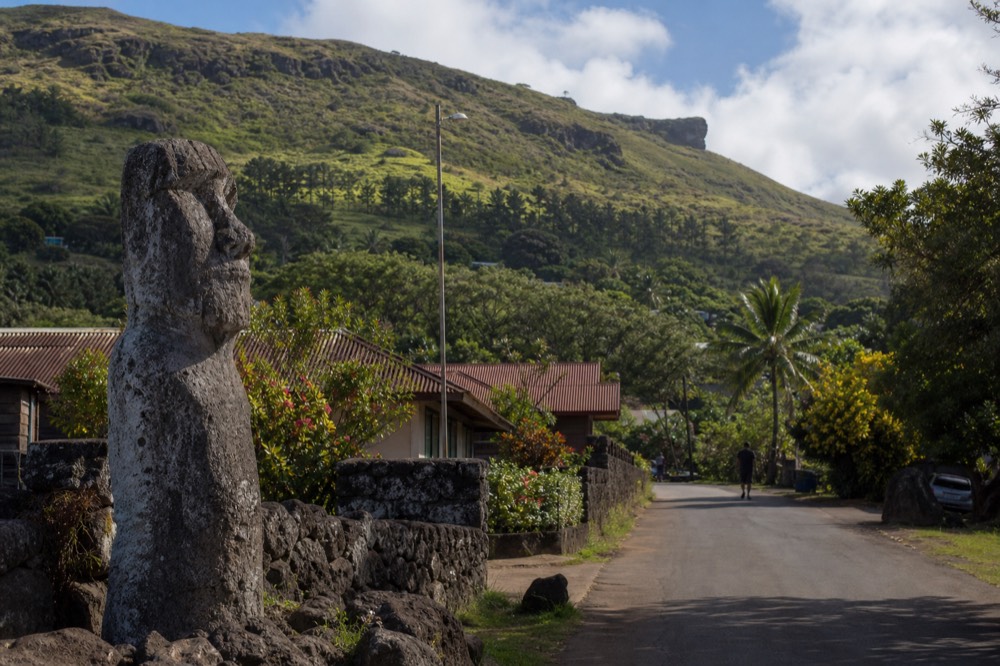
Practically, you will get by in English on any tour, in most restaurants and at the guesthouses. Spanish helps at the supermarket and the bank. Rapa Nui phrases are worth learning for the same reason they are worth learning anywhere: because using someone's own language in their own place is the cheapest courtesy available.
How many visitors are there compared with residents?
In a busy year, many times the resident population. Sernatur recorded roughly 150,000 visitors at the 2019 peak, then around 18,000 in 2022 after the pandemic closure. No official annual figure for 2025 or 2026 has been published, which is why serious sources stop quoting numbers after 2022.
| Figure | What it is |
|---|---|
| ~150,000 | Visitors in 2019, the pre-pandemic peak, per Sernatur |
| ~18,000 | Visitors in 2022, after the island reopened |
| No published figure | Official annual visitor count for 2025 or 2026 |
| 2,500 | Members of the Ma'u Henua indigenous community |
| 280 | People employed by Ma'u Henua at the park |
| 30 days | Maximum tourist stay under Law 21.070 |
That ratio is the whole reason the rules exist. An island with one town, one hospital, one airport and a finite water supply cannot behave like a mainland destination, so the entry form, the stay cap and the guide requirement act as a throttle. The 2019 to 2022 swing also shows how completely the local economy is exposed to a single airline route and a single mainland connection. It also explains why the austral summer sells out first: the same handful of operators serve everyone who arrives, so checking which full-day departures are still open is worth doing before the flights are booked rather than after.
Money on the island reflects that isolation more than any statistic does.
| Practical detail | What to expect |
|---|---|
| Currency | Chilean peso, with US dollars or euros accepted in some places if the notes are perfect |
| Cards | Widely accepted, but cash is preferred or required for small spending and taxis |
| ATMs | Two in Hanga Roa; they can run out of cash, especially at weekends and in high season |
| Anakena beach | Cash only for food and drink at the kiosks |
| Dinner, mid range | Around $20 to $40 per person, higher than mainland Chile because almost everything is shipped in |
| Tipping | Appreciated rather than expected, roughly 10% in restaurants |
The full breakdown of pesos, dollars and card acceptance sits in the currency explainer, which matters more here than in most places precisely because there are only two cash machines.
Where does visitor money actually go?
Into the community that runs the park. Ma'u Henua collects the $100 adult ticket, employs 280 people, accredits the guides you are required to hire, and funds conservation directly, including the physical restoration work that began in May 2025 on five of the moai worst damaged by the 2022 fire.
That conservation programme is the clearest example of the loop closing. After the October 2022 wildfire at Rano Raraku, UNESCO's Heritage Emergency Fund supported an assessment and a risk-management plan. The hands-on work that followed, soot removal, lichen control, stone strengthening and water-repellent treatment, was carried out by Ma'u Henua conservators using methods developed with restorers from the University of Florence. Ticket revenue pays for that kind of work rather than leaving the island.
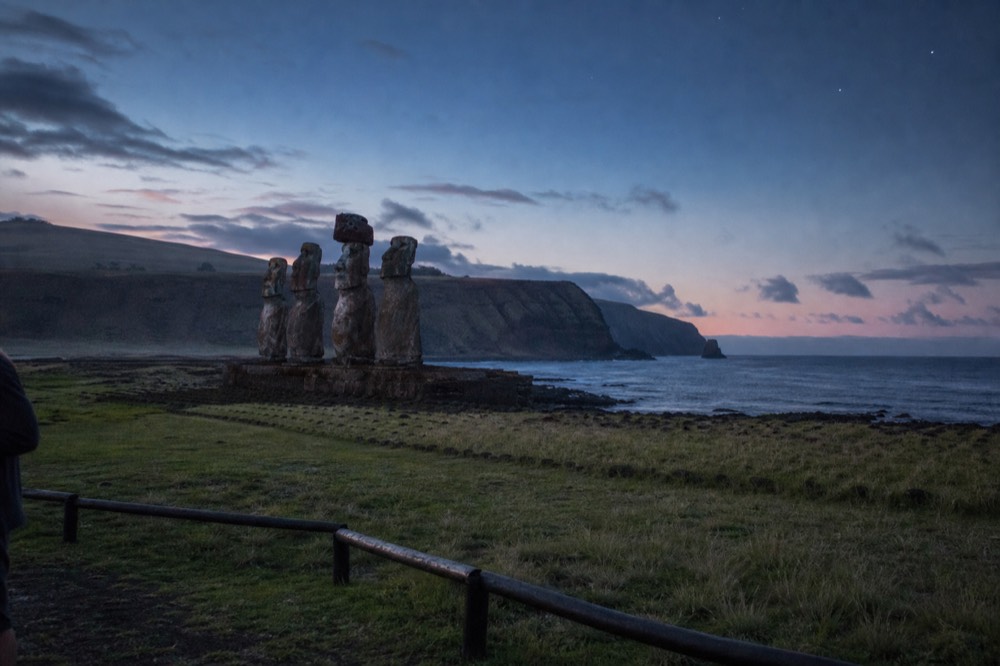
The guide rule works the same way. Because entry to park sites requires a guide accredited by Ma'u Henua, every day tour is a day of local employment, and the person interpreting the site for you generally has family history in it. Choosing a smaller operator changes how much of that conversation you actually get: it is worth seeing what a small-group day costs against a standard van tour on the dates you are considering.
Can a visitor meet the living culture?
Easily, and it takes almost no planning. The Tapati Rapa Nui festival runs from 30 January to 12 February 2027, the island commemorates the arrival of Hotu Matu'a at Anakena every 7 July, and the food alone tells the story: curanto cooked in an earth oven on volcanic stones, and tuna ceviche that was swimming that morning.
Tapati is the big one. Two weeks of competitions, music, dance and traditional contests, staged by the community for itself rather than for a tour bus, with more than 40 activities across the programme. The catch is capacity: the island has limited accommodation and it fills for the festival at prices to match, so imaginarapanui's 2027 schedule is worth reading months before you book flights.
The quieter version happens year-round. Curanto, also called umu on the island, layers meat, fish, seafood, sweet potato and taro in banana leaves over hot volcanic stones underground, and it is a communal dish rather than a restaurant novelty. Ceviche made with fresh local tuna is the everyday signature. Neither requires a ticket, a booking or a festival week, only a willingness to eat where the island eats and stay long enough to be there in the evening rather than running for a flight.
So yes, someone lives here. Around 2,500 of them belong to the community that decides how the moai are cared for, and the ticket in your pocket is part of how that gets paid for.