What currency is used on Easter Island?
Chilean pesos officially, US dollars in plenty of places, cards in most of Hanga Roa and cash only at Anakena. Two ATMs on the island, and they run dry.
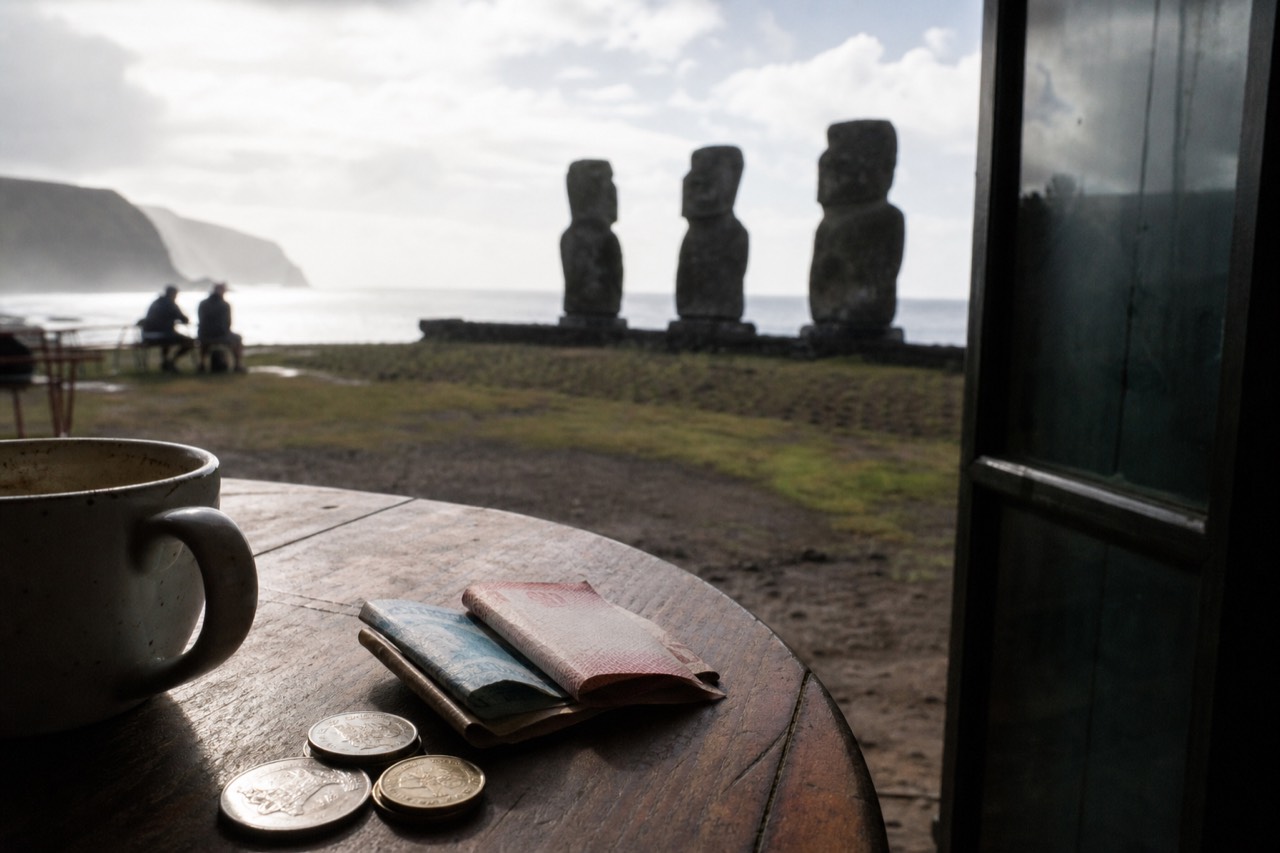
Two cash machines serve an island of one town, and both of them can be empty by Sunday morning in high season. That single fact reorganises how you should think about money on Rapa Nui, more than any exchange rate will.
The currency answer itself is simple. Everything downstream of it is where visitors get caught: which places take cards, which take dollars, which take nothing but pesos, and what happens when the machine says no.
Which money actually works on Rapa Nui?
The Chilean peso, officially and everywhere. US dollars are accepted in some places, as are euros, though notes need to be in perfect condition to be taken. Cards work widely across Hanga Roa. Cash is preferred or outright required for small purchases, taxis and certain spots, Anakena beach among them.
| Where you are spending | Peso | US dollars | Card |
|---|---|---|---|
| Hotels and guesthouses, Hanga Roa | Yes | Often | Widely accepted |
| Restaurants in town | Yes | Sometimes | Widely accepted |
| Small shops and kiosks | Yes | Sometimes | Cash preferred |
| Taxis | Yes | Sometimes | Cash |
| Anakena beach vendors | Yes | Unreliable | Cash only |
| Rapa Nui National Park ticket | 40,000 CLP national adult rate | $100 foreign adult, $40 child | Yes, on the official site |
| Tips | Yes | Accepted | Not usually |
The dollar-acceptance rule has a catch that catches Americans specifically. Notes have to be pristine: no tears, no heavy folds, no writing. A worn twenty that any US gas station would take without a glance can be refused here, and there is no second bank branch to argue with. Bring clean notes or bring pesos.
The park ticket sits in its own category because it is priced in two currencies for two different groups. A foreign adult pays $100, a foreign child $40, and a Chilean adult 40,000 CLP. That two-tier structure is set by the Ma'u Henua community, which administers the park, and it was adjusted upward on 1 October 2025 from the previous $80.
Where are the ATMs, and how often do they fail?
Two ATMs serve Hanga Roa, at the BancoEstado and Santander branches, and both are known to run out of cash, especially at weekends and in high season. The standard local advice is to withdraw early in your stay rather than when you need it, or to exchange at the banks in town.
Treat that as a planning constraint rather than a warning. An empty machine on a Saturday in January is not an emergency if you took cash out on Thursday. It becomes one if your only plan was the machine, your card is being declined for a reason you cannot resolve from the middle of the Pacific, and your flight out is Monday.
Three habits solve it. Withdraw on your first full day in town, not your third. Split the cash so it is not all in one bag. And carry a modest dollar reserve in clean notes as a backstop, since some businesses will take those when nothing else is working.
The bank branches themselves are also the exchange option, which is worth knowing if you arrive with dollars or euros and would rather hold pesos. Hours are a small-town matter, so the first morning is the right time to sort it, before the circuits start eating your days.
What do you actually need cash for?
Taxis, small shops, kiosks, tips and Anakena. Everything larger tends to take a card. The useful frame is that cash covers the small, spontaneous purchases of a day out, while the big-ticket items, lodging, park entry and guided days, are booked or paid on a card before you are anywhere near a cash machine.
| What you are paying for | Typical 2026 level | How it usually gets paid |
|---|---|---|
| Park ticket, foreign adult | $100 ($40 child) | Card, on the official park site or on arrival |
| Guided full day | $100 to $294 per person | Card, booked ahead |
| Taxi, Hanga Roa to Ahu Tongariki | $20 to $30 each way | Cash |
| Scooter rental | $35 to $50 a day | Card or cash |
| Rental car, compact 4WD | $60 to $115 a day | Card |
| Mid-range dinner | $20 to $40 per person | Card in town, cash at kiosks |
| Campsite | $16 to $20 a night, around 10,000 CLP with facilities | Cash |
| Tip at a restaurant | Around 10 percent, appreciated rather than expected | Cash |
Tipping deserves a sentence of its own because visitors overthink it. It is appreciated and not mandatory, with roughly 10 percent noted at restaurants. Guides who have given you a genuinely good eight-hour day are tipped by many visitors, in cash, in pesos, and nobody is counting.
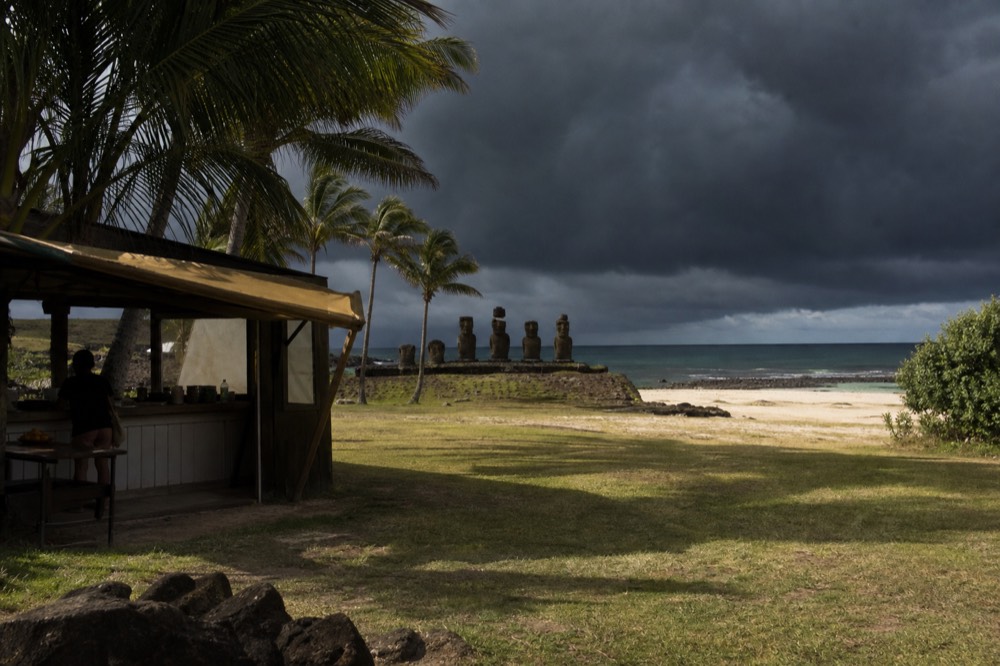
Anakena is the recurring exception and the one that ruins afternoons. It is the island's sheltered beach, the end point of most full-day circuits, and it has restaurants, vendors and food trucks. It is also reported as cash only. Arriving there after seven hours in the sun with nothing but a card is a small, entirely avoidable misery, and it connects directly to the tap water question, since Anakena is the only stop on the circuit that could sell you a drink.
Why do prices get quoted in two different currencies?
Because two different economies meet here. Tourism prices in US dollars, since that is what the international market books in, while daily island life runs on pesos. The park ticket makes the split official by charging foreigners in dollars and Chileans in pesos for exactly the same entry.
That explains most of the confusion travelers report. A guided day advertised at $120, a hotel quoted in dollars, a park ticket at $100, then a taxi driver quoting pesos and a kiosk pricing a snack in pesos. Neither figure is a markup on the other. They are two price systems sitting side by side in a town of a few thousand people.
Island prices sit above mainland Chile across the board, and that is an import effect rather than a tourist tax. Almost everything arrives by air. A mid-range dinner at $20 to $40 a head reflects the freight cost inside it, and the same applies to fuel, rentals and groceries. The full trip-cost breakdown prices a realistic week against those levels.
One more currency quirk is worth planning for. Because the park ticket is a fixed dollar amount rather than a percentage, it lands hardest on short trips: $100 buys ten consecutive days of access whether you use two of them or nine. Anyone staying long enough to run both circuits gets far more out of the same ticket, which is part of why the two-day package at $170, holding 4.4 across 259 reviews, is the most-booked format on this site. Compare that against a single day and check what the two-day package costs on your dates before you decide how many days to give the island.
What is the sensible money plan for a Rapa Nui trip?
Book and pay for the big items before you fly: lodging, park ticket, guided days. Withdraw pesos on your first full day in Hanga Roa. Carry clean small-denomination dollars as a backstop. Keep cash on you every day of the circuit, and never leave for Anakena without it.
The order matters because of what the entry rules already force. You cannot file the island entry form without a booked return flight and Sernatur-registered accommodation, so the accommodation is paid or guaranteed before you leave home anyway. Adding the park ticket and the guided days to that pre-paid block leaves you carrying cash for food, taxis and tips only, which is a much smaller number than most visitors expect.
Two smaller decisions round it out. Tell your bank you are travelling to Chile, because a card frozen for suspicious activity is a genuinely bad problem on an island with two machines. And decide early whether you are renting a vehicle at all, since park sites cannot be entered without a Ma'u Henua-accredited guide, which means a $90 rental day and a guided day are not substitutes for each other.
For most visitors the cleanest structure is a guided circuit or two plus a couple of free days in town on foot. If a dawn at Tongariki is on the list, the three-day format with a dedicated sunrise outing holds 4.7 across 152 reviews from $250, and seeing which sunrise departures are open is the first thing to do once the flights are set. The multi-day lineup shows the packages side by side, and the park ticket guide covers the payment and validity rules in detail.