Is Easter Island safe? The real risks are not criminal
Violent crime against visitors is effectively absent on Rapa Nui. The genuine hazards are cliffs, currents, sun and distance from a hospital that can help.
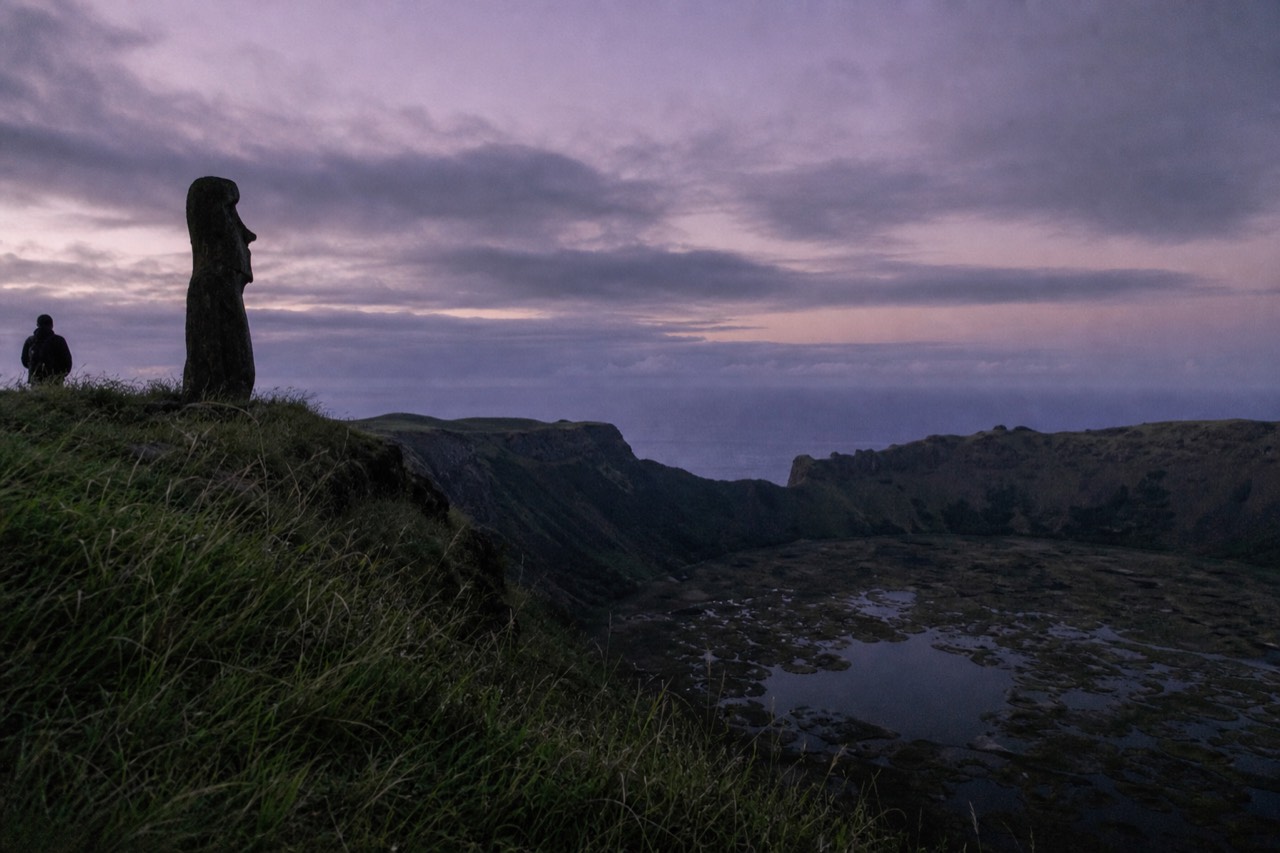
Rano Kau's crater rim drops away in a single unfenced sweep to a reed-covered lake a couple of hundred metres below. Nobody on Rapa Nui is going to mug you up there. The edge, on the other hand, does not care who you are.
That inversion is the whole safety picture on this island. Threats that dominate travel advice for mainland South America barely register here, and the risks that do exist are the kind travelers routinely underestimate because they do not look like danger.
What does the crime picture actually look like?
Rapa Nui carries a reputation as exceptionally safe, with virtually no violent crime reported against tourists in current sources. National advisories for Chile, including the US Level 2 in force through August 2026, focus on petty crime and unrest in mainland areas and carry no island-specific warning. Ordinary care with belongings is the whole of it.
The island is one small town, Hanga Roa, and a national park covering most of the rest of it. Everyone in the town knows everyone in the town. That social structure does more for visitor safety than any policing model, and it shows in the pattern of what people report: opportunistic theft from unattended bags, vehicles and beach towels, and almost nothing else.
Walking around Hanga Roa after dark is not the concern here that it would be in a large mainland city. The practical constraints are lighting and traffic rather than crime, and most visitors are back from a full-day circuit by dinner anyway. Keep your passport and cash where you would keep them anywhere, do not leave a daypack visible in a parked car, and the crime question is closed.
One honest note on the evidence. Current advisories and 2026 reporting contain no island-specific road or hiking incident warnings at all, which is genuinely useful information rather than an absence of research. It also means the hazard list below is built from what the terrain and the rules actually are, not from a casualty record.
What actually hurts visitors on Rapa Nui?
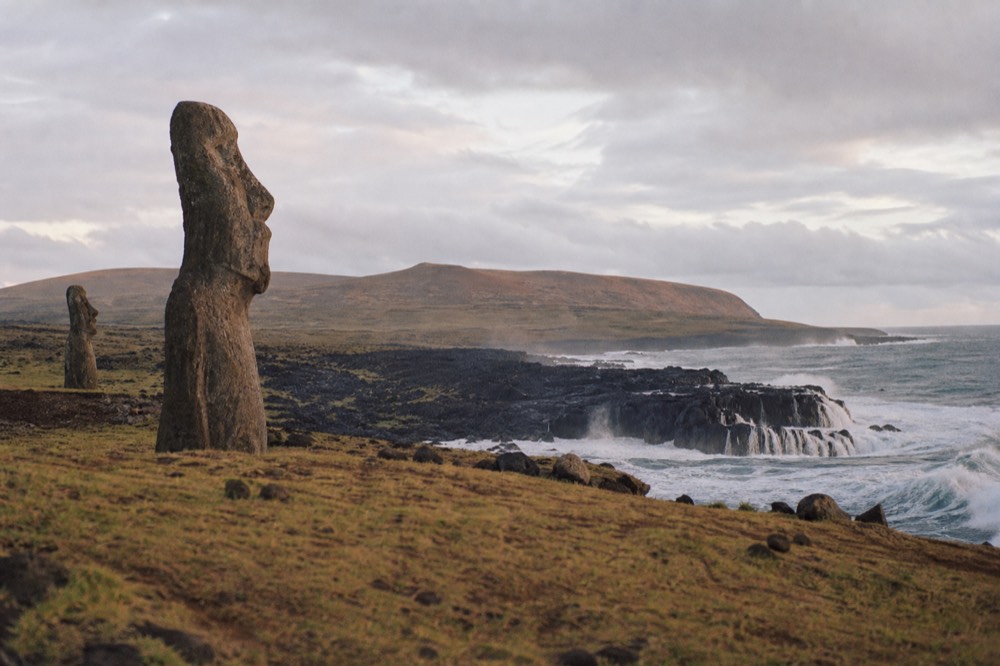
Geography and exposure. Unfenced crater rims at Rano Kau and Orongo, open-Pacific swell against a coastline with one sheltered beach, sun and constant trade wind on sites with almost no natural shade, and loose ground on the quarry slope at Rano Raraku. None of it is exotic. All of it is easy to walk into.
| Hazard | Where it shows up | What removes most of the risk |
|---|---|---|
| Unfenced height | Rano Kau crater rim, the Orongo ceremonial village on its edge | Staying on marked paths; a guide who knows where the ground is undercut |
| Ocean swell and current | The south coast, which takes Pacific swell directly, and the rocky coves either side of it | Swimming only at Anakena, the island's one sheltered beach |
| Cold-water fatigue | Anywhere in the water outside high summer; sea temperature falls to about 20.5°C in late August from a 25 to 27°C March peak | Short swims, watch the wind chill on the way out |
| Sun and wind together | Every park site; the island was largely deforested before European contact and the palms at Anakena were planted in 1960 | Cover, water, and treating wind as a reason to drink more rather than less |
| Uneven ground | The quarry slope at Rano Raraku, lava-tube caves at Ana Te Pahu | Marked routes and proper shoes; the single-entry rule means one careful visit, not two casual ones |
| Opportunistic theft | Unattended bags in vehicles or on the beach | Normal precautions, nothing island-specific |
The shade point deserves emphasis because it surprises people who have read about a tropical Pacific island. Rapa Nui has almost no tree cover. The original palms were gone long before European contact, and the ones shading Anakena today were imported and planted in 1960. Stand at Tongariki at midday and there is nothing between you and the sky. Combine that with a trade wind that dries sweat before you notice it and dehydration arrives quietly, which is also why the tap water question matters more here than it looks.
What happens if you need a doctor?
Hanga Roa has a hospital and it handles first-line care. It is not a trauma centre. Advanced treatment means a flight to Santiago, five and a half hours on the only airline serving the route, so the honest way to think about medical risk here is distance rather than quality.
| Situation | What the island has | What that means in practice |
|---|---|---|
| Routine illness or minor injury | Hospital in Hanga Roa | Handled locally; the same hospital tests the town's water supply |
| Serious or specialised care | Not available on the island | Nearest advanced care is Santiago, a 5.5-hour flight on the sole scheduled carrier |
| Mosquito-borne illness | Local dengue transmission confirmed in March 2026, 14 cases with some hospitalised | Repellent, cover at dusk, take bites seriously |
| Evacuation timing | One route, limited frequency | Flights run roughly 5-plus a week, so timing is not on demand |
Two conclusions follow, and both are unglamorous. Travel insurance with medical evacuation cover is not optional paperwork on an island this isolated. And chronic-condition medication should travel with you in quantity, because a pharmacy 2,200 miles from the nearest city restocks on an aircraft schedule.
Dengue is the one genuinely new item on the health list. Local transmission was reported in March 2026 with 14 confirmed cases, some requiring hospitalisation, and the island is recognised as vulnerable to mosquito-borne viruses. That is a small outbreak by global standards and not a reason to cancel anything, but repellent belongs in the daypack alongside the sunscreen.
Why does the guide rule double as safety cover?
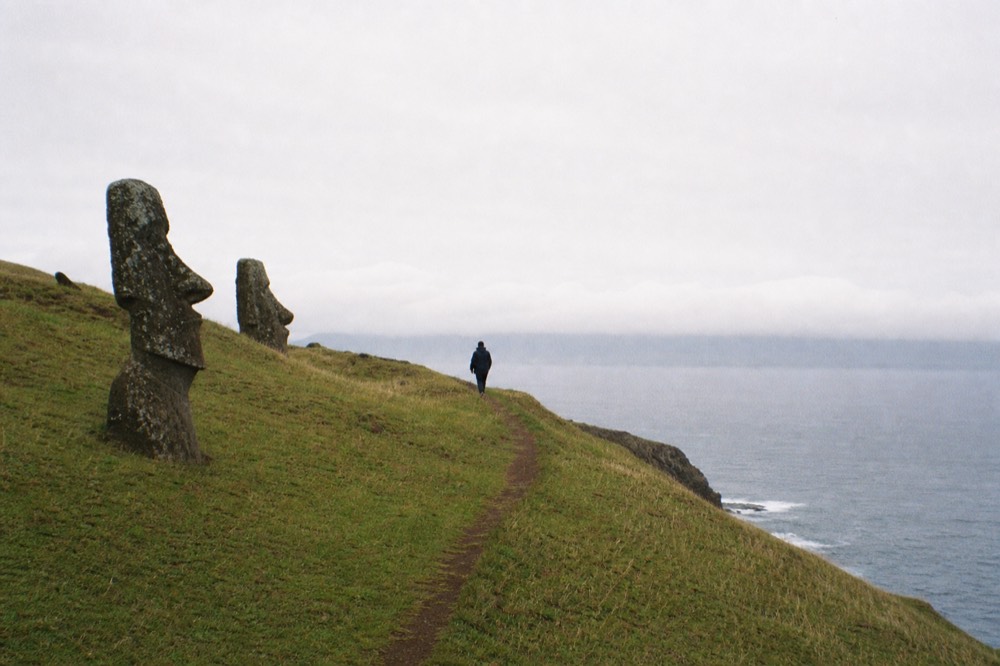
Because the same accredited local guide the park requires for every site visit is also the person who knows which edges are undercut, which coves have current, and how long the walk actually takes. The Ma'u Henua community imposed the rule to protect the monuments. It happens to protect visitors too.
Entry to Rapa Nui National Park sites requires a Ma'u Henua-accredited guide, with no independent-visit option, and that is stated plainly on the official park site. Travelers sometimes read it as a revenue mechanism. Spend a morning at Rano Raraku watching where people instinctively want to stand, and the conservation logic becomes obvious: the ropes and paths exist because the ground itself is the artefact.
The safety dividend is real and mostly invisible. A guide sets the pace so nobody is scrambling on the quarry slope in the last light. A guide knows that Rano Raraku and Orongo are single-entry per ticket and plans the day so you are not rushing the one visit you get. A guide drives the circuit road, which matters most for the pre-dawn run to Tongariki, where the site opens at 6:00 and sunrise lands between roughly 6:30 in summer and 7:30 in winter. Driving unfamiliar unlit roads before dawn is the part of a self-drive plan that most deserves a second thought.
There is also a compliance edge to it. Touching, leaning on or climbing a moai carries fines of 5 to 100 UTM under Chile's national monuments law, and drones need authorisation. A guide keeps you the right side of rules that are enforced, and why the no-touching rule exists covers what the stone is actually made of.
What should you actually do differently here?
Swim only at Anakena. Carry more water than the temperature suggests, because the wind is doing the drying. Keep off unfenced edges and off the moai. Take the guided circuit rather than a rental car, since the car cannot get you into the sites anyway. Buy insurance that covers evacuation.
The daypack list is short and specific to this island: water, sun cover, repellent since March 2026, a wind layer even in February, and shoes that handle uneven volcanic ground rather than sand. Nothing on that list is dramatic. All of it gets forgotten by someone who packed for a Pacific beach and landed somewhere closer to a windswept moor with statues on it.
The structural decision matters more than the packing. Because park sites need an accredited guide regardless, the choice is not between a tour and independence, it is between a tour and a car that stops at the gate. Small-group formats are where the safety margin is widest: fewer people, unhurried stops, and a guide with room to answer questions. The boutique small-group day holds 4.9 across 33 reviews from $200, and it is reasonable to check which small-group departures are still open before committing to dates.
Travelers with mobility limits, small children or a medical condition that needs a predictable pace should look harder at a private day, where the itinerary bends around you rather than the reverse: the private circuit sits at 4.9 across 28 reviews from $230, and seeing what a private vehicle and guide cost for your group is often less of a jump than expected. For everything else, the things-to-do guide flags which activities sit outside the park boundary and can be done without a guide at all, and the full day-tour lineup shows which departures include hotel pickup.