What an Easter Island trip actually costs in 2026
The flight is the number everyone quotes and it is rarely the biggest one, because everything you eat, drive and sleep in on the island arrived on the same aircraft you did.
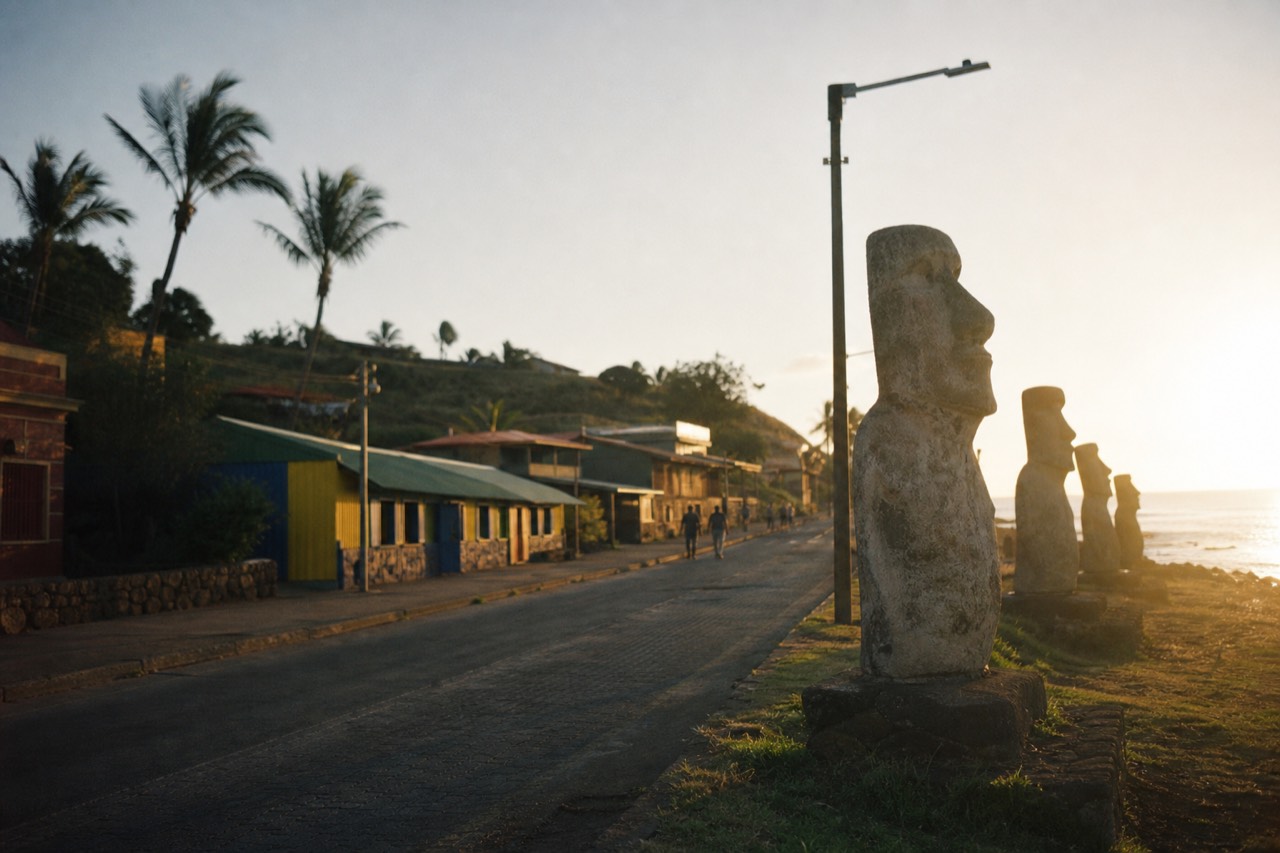
Short answer
Published 2026 budgets put a four-day Easter Island trip from Santiago at roughly $1,200 to $1,600 lean, $1,800 to $3,200 mid-range, and $3,500 and up for comfort, per person. The fixed floor is about $450 to $600: a $342 to $504 round-trip flight plus the $100 park ticket.
A tomato in Hanga Roa flew here. So did the flour, the beer, the diesel in the rental Jimny, and the tyres on it. There is one supply route to Rapa Nui and it is the same five and a half hour flight from Santiago that brought you, which explains almost everything about the price of a dinner, a bed and a tank of fuel on an island 2,200 miles from the nearest city.
That single fact does more work than any budgeting spreadsheet. Once you accept that the island's prices are shipping costs wearing a menu, the numbers stop feeling arbitrary and start being planable. And the good news buried in there is that the part everyone dreads, the airfare, is often the cheapest line in the whole trip.
What does an Easter Island trip cost in 2026?
Published 2026 budgets put four days from Santiago at roughly $1,200 to $1,600 lean, $1,800 to $3,200 mid-range, and $3,500 or more for comfort, per person. Daily on-island spending runs about $43 at the budget end to $212 at the luxury end, before flights.
| Cost category | Typical 2026 range per person | Notes |
|---|---|---|
| Round-trip flight from Santiago | $342 to $504, spikes past $650 | The only route, so seasonal demand rules |
| Rapa Nui National Park ticket | $100 adult, $40 child | Ten days validity, never included in tours |
| Lodging, per night | $16 to $200 and up | Campsite to mid-range hotel double |
| Food, per day | $30 to $100 | Mid-range dinner alone is $20 to $40 |
| Island transport | $20 to $115 | Taxi leg to 4WD day rate |
| Guided days | $100 to $294 | Single full day to a private archaeology day |
| Four-day total, all in | $1,200 to $3,500+ | Depends entirely on beds and guiding |
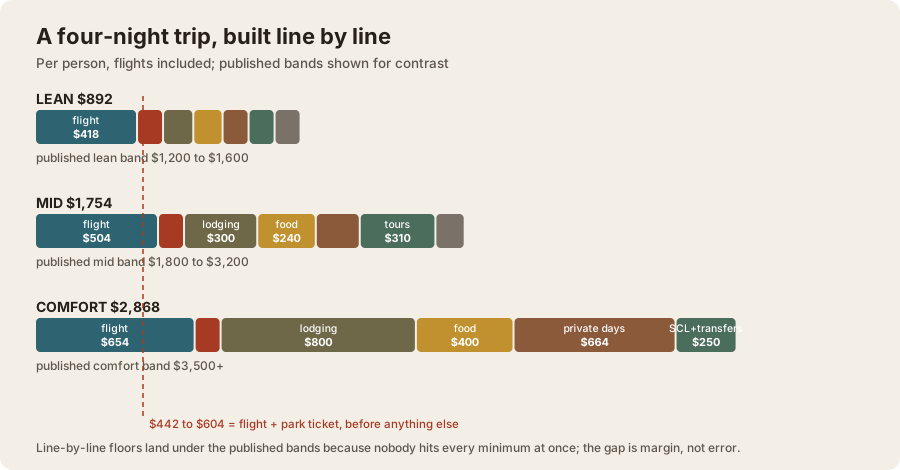
Those bands come from 2026 budget guides and traveler reports rather than from a formula, which is why they overlap and why the spread inside each one is wide. Build the same trip from its parts and you get a slightly different picture: a lean four-night visit assembled from the bottom of each range lands nearer $900 to $1,000, and the published budget band sits higher because it assumes a longer stay, more guided time or a pricier flight.
The mid-range band is the honest one for most visitors. It covers a real hotel room rather than a dorm bed, a couple of restaurant dinners, wheels for a day or two and two guided days, and it is where a trip stops feeling like an endurance exercise. Above it, the money buys privacy and pace rather than access, since the same sites are open to everyone holding the same $100 ticket.
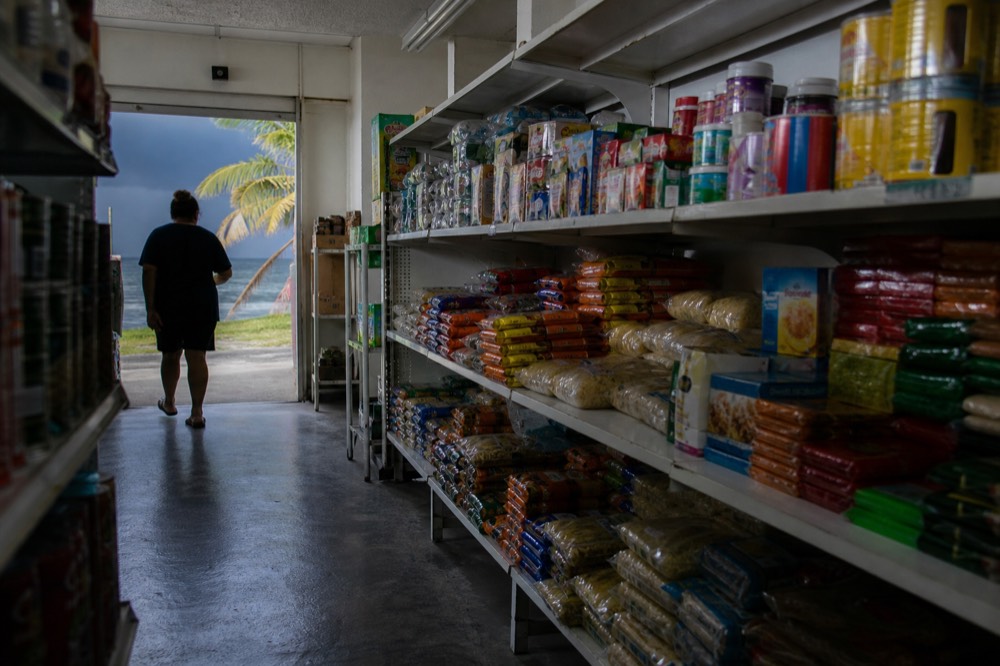
One thing the bands hide: the fixed floor. Before you sleep, eat or move, a foreign adult is $442 to $604 in, on the flight and the park ticket alone. That number does not respond to frugality, which is why the real cost lever on this trip is not the airfare but how many nights you stay and how you spend the days.
Why is Easter Island so expensive?
Because everything arrives on one flight. A single airline serves the island, imports set food and fuel prices, lodging supply is limited and must be Sernatur-registered, and park sites require both a $100 ticket and a mandatory accredited guide. None of those costs has a competitive alternative to be shopped against.
Start with the route. LATAM is the only carrier flying to Mataveri, and a monopoly on a thin route prices like a monopoly on a thin route. There is no second airline to undercut a peak-week fare, and no overflow capacity, so when demand builds the price simply goes up until it stops.
Then look at the shelves. A mid-range dinner on the island runs $20 to $40 a head, higher than mainland Chile, and the reason is freight rather than markup. Restaurants pay air-cargo prices on ingredients that a Santiago kitchen buys by truck, and the same logic runs through fuel, spare parts, construction materials and the price of a rental vehicle that has to be maintained on an island with no parts supplier.
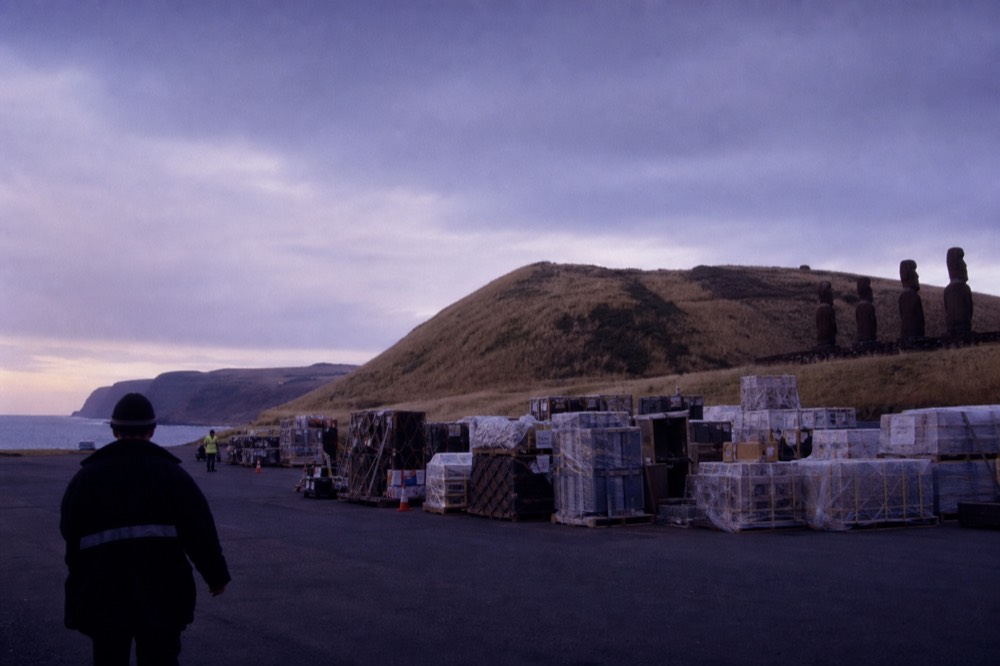
The third factor is regulatory and it is deliberate. Tourist accommodation must be registered with Sernatur, tourist stays are capped at 30 days, and every visitor files an entry form before boarding. Those rules protect a small community and a fragile archaeological landscape, and they also mean the bed supply cannot balloon in response to demand the way it does in an ordinary destination. When a festival fills the island, prices move because rooms genuinely run out.
Finally there is the guide rule, which converts sightseeing from a free activity into a paid one. Park sites require an accredited Ma'u Henua guide, so the $100 ticket is a floor rather than a total. That structure is unusual, and it is the single most common reason visitors report spending more than they planned. What the ticket does and does not buy sets out exactly where that line falls.
What do the flights cost, and when are they cheapest?
Round-trip economy from Santiago typically runs $342 to $504 in 2026, with a recent low near $418 and peak examples of $654 and $682. Broader guides quote $500 to $900 for peak economy. Booking around ten weeks out saves roughly 27% against last-minute purchase.
| Booking or timing choice | Effect on the fare | Worth doing? |
|---|---|---|
| Book around 10 weeks ahead | About 27% below last-minute | Yes, the clearest saving available |
| Travel in April, May, June or August | Bottom of the typical band | Yes, and the island is quieter |
| Travel in January or February | Peak, spikes past $650 | Only for the Tapati festival or fixed school holidays |
| Book inside a week | Peak-level pricing, sometimes no seat | Avoid entirely on a thin route |
| Shift departure by a day or two | Fares move with the day of the week | Often worth $50 to $100 |
| Chase a mythical second airline | There isn't one | No |
The 27% figure is the actionable one and it converts nicely. On a $450 fare that is about $120 saved, which happens to be the price of a full-day guided circuit. Booking at the right moment does not trim your trip, it funds a day of it.
Season matters more than any booking trick, though. January and February are austral summer with school holidays and the Tapati festival, July catches northern-hemisphere holidays, and those three months carry the spikes. April, May, June and August sit at the soft end, and August through October also happens to bring the clearest night skies of the year, which is not nothing on an island this far from light pollution.
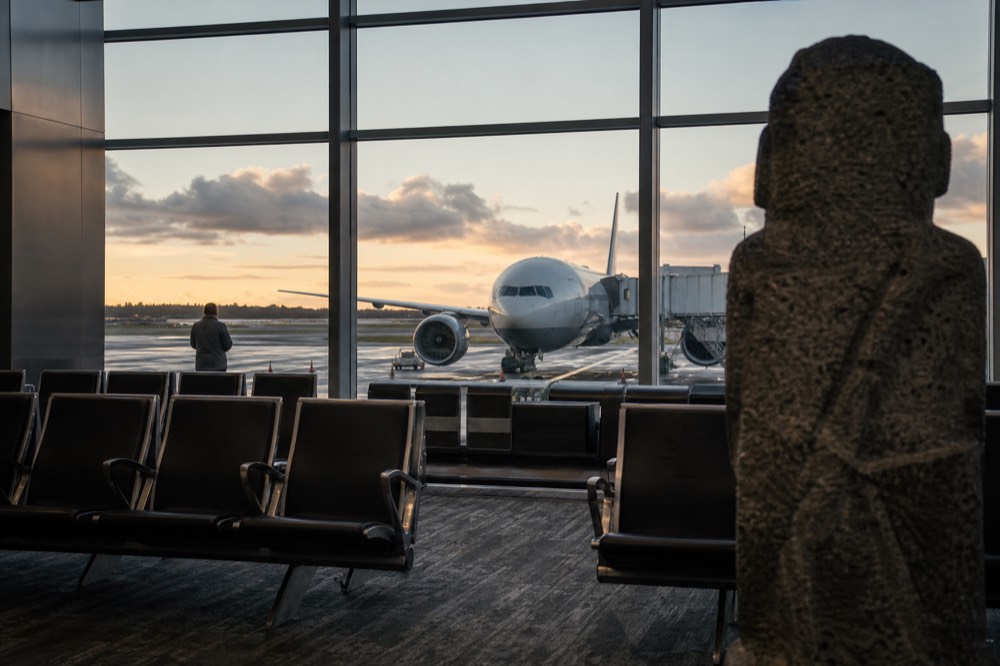
One cost most budgets omit: a Santiago overnight before the island flight. With five or so departures a week, a missed connection is a lost day rather than a lost hour, and a hotel night in Santiago is the cheapest insurance policy in the itinerary. The full flight, fare and paperwork picture covers why the schedule is the fragile part of this trip, and the current LATAM route page is where the live timetable sits.
What do you pay before you even land?
Three things: the flight, the $100 park ticket, and a Santiago overnight to protect the connection. The FUI entry form is free but mandatory. A foreign adult is therefore $442 to $604 committed before the first island meal, and a family of four with two children adds $280 of tickets alone.
| Pre-arrival item | Adult | Child | Notes |
|---|---|---|---|
| Round-trip flight from Santiago | $342 to $504 | Varies by fare rules | Peak dates spike past $650 |
| Rapa Nui National Park ticket | $100 | $40 | Ten consecutive days, single entry at two sites |
| FUI entry form | Free | Free | Required for every visitor including Chileans |
| Sernatur-registered accommodation | Booked in advance | Booked in advance | Legal requirement before filing the FUI |
| Non-transferable return ticket | Required | Required | Caps the stay at 30 days |
| Fixed floor before island spending | $442 to $604 | $382 to $544 | Excludes lodging, food, transport, guides |
The park ticket is the line that trips up people budgeting from older sources. It rose to $100 for foreign adults on October 1, 2025, from $80, and a great deal of travel content still shows the old figure. Anyone working from a stale page is $20 per adult short before they start, and $40 short as a couple. The announcement of the price adjustment records the change, and the official park site sells at the current rate.
Families feel this layer hardest. Two adults and two children pay $280 in park tickets, and unlike almost every other national park in the world there is no family rate, no annual pass and no discount channel. Every person is a separate named ticket checked against identification at site entrances.
The accommodation requirement has a budgeting consequence people miss. Because a registered booking is needed before you file the entry form, you cannot arrive planning to negotiate a cheap room on the ground. The bed is priced and paid for before you board, which removes the main lever budget travelers usually pull.
What does a night on the island cost?
From about $16 at a campsite to $200 and up for a mid-range hotel double. Hostel dorms run $23 to $47 with an average near $31. Almost all lodging sits in or around Hanga Roa, and every legitimate option is Sernatur-registered because that registration is what gets you through the entry check.
| Lodging type | Nightly rate | What you actually get |
|---|---|---|
| Campsite | About $16 to $20, or around 10,000 CLP | Pitch with facilities at some sites |
| Hostel dorm | $23 to $47, average near $31 | Bed in a shared room, kitchen access |
| Guesthouse or residencial | Lower end of the hotel band | Family-run rooms, airport pickup usual |
| Mid-range hotel double | $45 to $200 and up | Private room, varies hugely by property |
| Premium lodging | Above the $200 mark | Where the comfort budgets go |
| Festival weeks | Sharply higher, books out early | Tapati runs January 30 to February 12, 2027 |
The spread inside "mid-range hotel" is wider than anywhere else in this guide, and that is real rather than sloppy reporting. A simple double in Hanga Roa and a well-appointed hotel room a few streets away can differ by a factor of four, because the island's lodging stock was not built to a standard. Read the actual property rather than the category.
Self-catering changes the maths more here than in most destinations. A dorm bed at $31 with a kitchen, against a hotel double at $150 with restaurant meals, is a swing of well over $100 a day per person once food is counted. That single choice is what separates the lean budget band from the mid-range one.
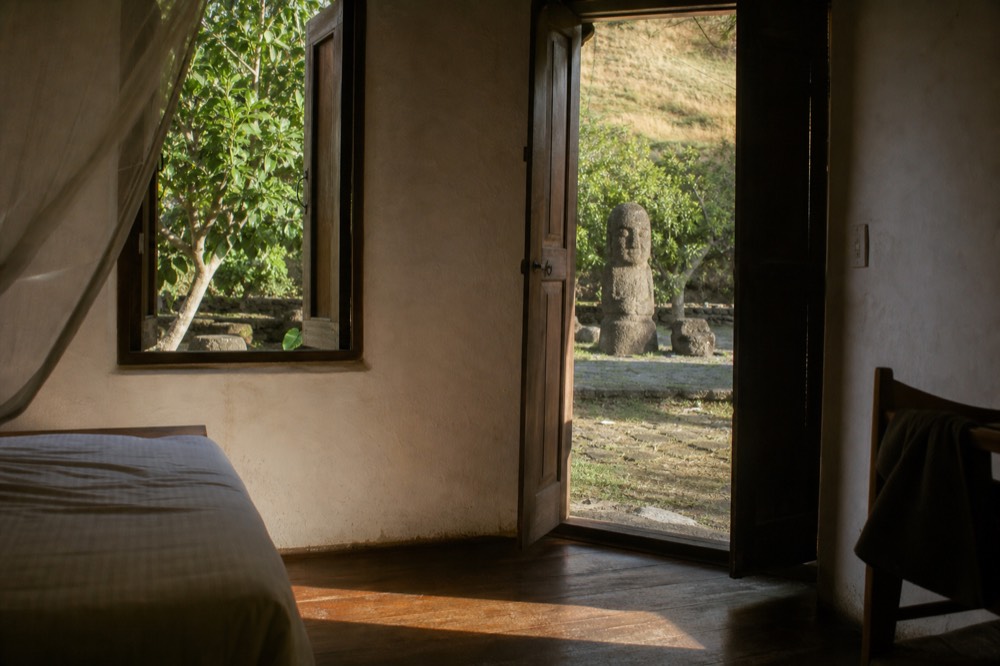
Timing your booking matters for beds more than for flights. Island accommodation is limited, and the Tapati festival window in particular sees high demand and high prices, with early booking strongly advised. Where to base yourself and what each area gives you works through the Hanga Roa options, since there is effectively nowhere else to stay.
What do food and getting around cost?
Budget $30 to $100 a day for food, since a mid-range dinner alone is $20 to $40. Transport runs $20 to $30 for a taxi leg to a site, $35 to $50 a day for a scooter, and $60 to $115 for a car or 4WD, with compact 4WDs commonly around $90 to $114.
| Item | 2026 rate | Practical note |
|---|---|---|
| Taxi, Hanga Roa to a site such as Tongariki | $20 to $30 each way | $40 to $60 round trip, cash preferred |
| Scooter rental | $35 to $50 per day | Cheapest independent wheels |
| Car or 4WD rental | $60 to $115 per day | Compact 4WD commonly $90 to $114 |
| Mid-range dinner | $20 to $40 per person | Higher than mainland Chile, imports |
| Daily food, self-catering | Around $30 | Kitchen access changes the total |
| Daily on-island spend, budget | About $43 per person | Excludes flights |
| Daily on-island spend, luxury | About $212 per person | Excludes flights |
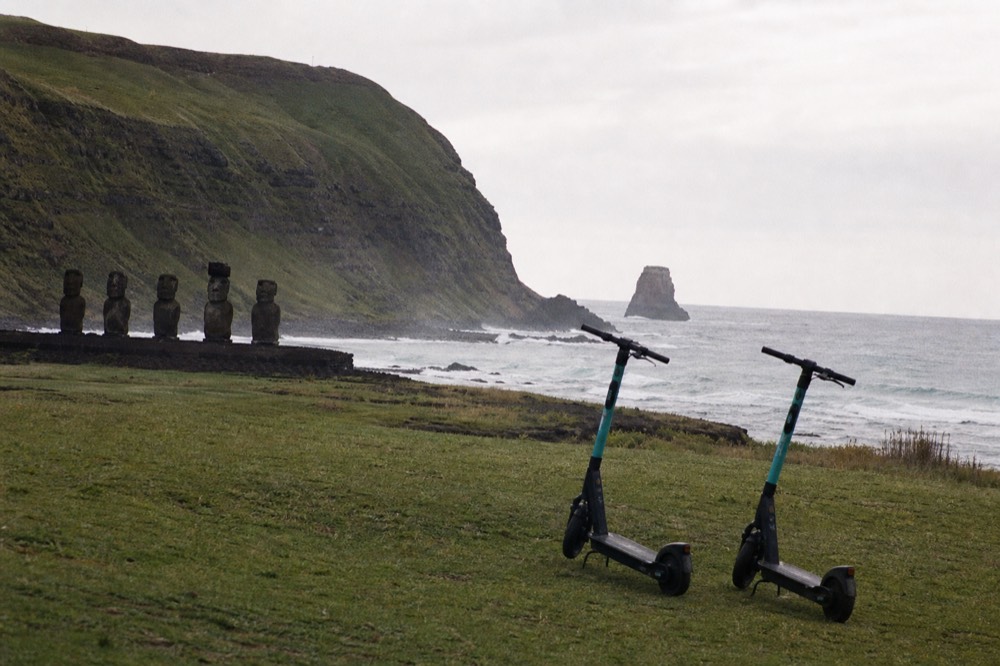
Transport is where self-planned itineraries quietly overrun. Two taxi runs to the far side of the island cost $40 to $60, and you still need a guide to enter the sites at the other end, so the taxi has bought you transport rather than access. A 4WD day at $90 has the same problem in a more expensive package. Guided circuits that bundle vehicle, pickup and accredited guide into one price usually beat assembling the day from parts.
Cash discipline saves real money and stress. The Chilean peso is the working currency, cards are widely accepted in Hanga Roa, and cash is still wanted for taxis and small purchases, with Anakena commonly cash-only. There are two ATMs in town and they can run out, particularly at weekends and in high season, so draw pesos in Santiago rather than assuming. How money works on the island covers the card, cash and tipping specifics.
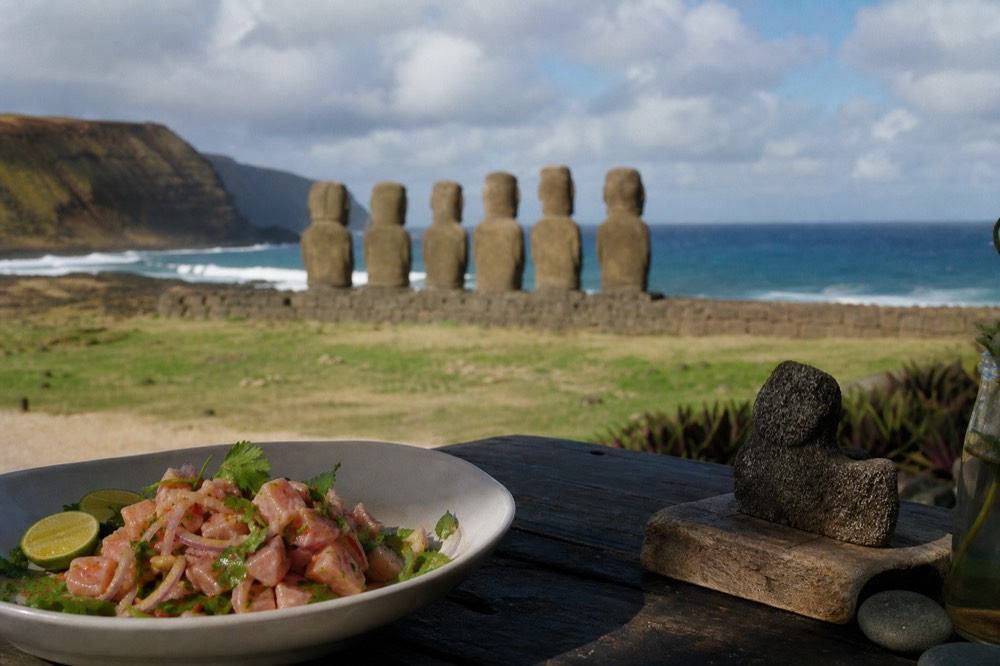
Food has an upside worth spending on at least once. Tuna ceviche here is a signature local dish rather than a tourist facsimile, and curanto, the earth-oven feast of meat, fish, seafood and tubers cooked over hot volcanic stones under banana leaves, is a genuine Rapa Nui tradition. Neither is cheap, and skipping both to save $60 is a poor trade on a trip that cost this much to reach.
What do the guided days cost?
From $100 for a full-day circuit to $294 for a private archaeology day. The two-day package covering both main circuits is $170, the three-day itinerary with the Tongariki sunrise is $250, and the night-sky session is $140. Every one of these is priced on top of the $100 park ticket.
| Tour | From | Length | Rating (reviews) | Operator |
|---|---|---|---|---|
| Full-Day Moai and Mystery | $100 | Full day | 4.4 (24) | Hotumatur Rapa Nui |
| Full-Day Rapa Nui National Park circuit | $120 | 8 to 9 hours | 4.8 (103) | Rapa Nui Dream |
| Rapa Nui Stargazing night | $140 | 3.5 hours | 4.5 (64) | Green Island Tours |
| Easter Island Highlights, two days | $170 | 2 days | 4.4 (259) | Hotumatur Rapa Nui |
| Adventures in Rapa Nui, small group | $200 | Full day | 4.9 (33) | Easter Island Your Tour |
| Private Full-Day Moai Monuments | $230 | Full day | 4.9 (28) | Green Island Tours |
| Three days plus Tongariki sunrise | $250 | 3 days | 4.7 (152) | Rapa Nui Dream |
| Private Full-Day Archaeological Sites | $294 | 7 hours | 5.0 (20) | Kava Kava Tours |
Read that ladder as inclusions rather than as a quality ranking, because the ratings do not line up with the prices. The $120 circuit holds 4.8 across 103 reviews, higher than the $170 package and the $200 small-group day. What the extra money buys is group size, pace, privacy or extra days, not better archaeology.
The cheapest genuine option is a single full day at $100, which covers the arc most people fly here for: the toppled ahu of the south coast, the quarry at Rano Raraku, the fifteen giants at Tongariki, and Anakena. Travelers on a two-night stop should check what the lowest-priced full day costs on their dates, because with one usable day the choice is that circuit or nothing.
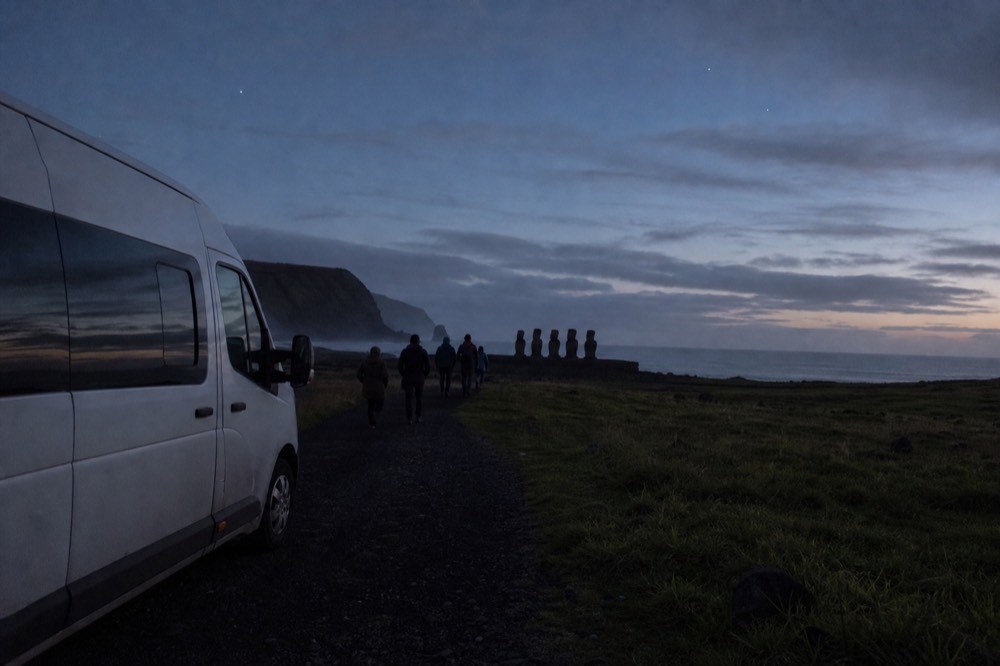
Value per day tips toward the packages. At $170 for two days, the highlights package works out to $85 a day and covers both single-entry sites, Rano Raraku on day one and Orongo on day two, which a single circuit cannot do. At $250 for three days it is about $83 a day and adds the dawn outing at Tongariki, the one thing that cannot be folded into a circuit. Anyone weighing the two should compare what the three-day itinerary with sunrise costs against two separate bookings.
Where should you save, and where should you not?
Save on beds, wheels and self-catering, which move the total by hundreds. Do not save on guided days, since access to park sites requires an accredited guide, or on the Santiago overnight, since a missed connection on a five-a-week route costs a whole day of a trip you already paid for.
| Decision | Save here | Do not save here |
|---|---|---|
| Lodging | Dorm or guesthouse over a hotel, easily $100 a day | Booking an unregistered place, it blocks entry |
| Food | Kitchen access and market shopping | Skipping ceviche and curanto entirely |
| Transport | Scooter over 4WD, or a bundled tour vehicle | Taxis to sites you cannot enter without a guide |
| Guided days | Group circuits over private ones | Going unguided, which is not permitted in the park |
| Flights | Shoulder months and the ten-week window | Cutting the Santiago connection buffer |
| Park ticket | Nothing to save, the price is fixed | Buying from any unofficial channel |
| Trip length | Two nights if the budget is hard-capped | Arrival day, it is never a touring day |
The clearest saving on the whole trip is the lodging choice, and it is worth being unsentimental about it. Four nights in a dorm at $31 rather than a hotel double at $150 saves roughly $476 per person, more than the flight. If the trip only works at the lean end, that is the lever, not the tour budget.
The clearest false economy is trying to see the park without a guide. It does not work, because guided access is the rule rather than a recommendation, and the money spent on a rental car to drive to gates you cannot pass is money gone. If the budget is tight, the right shape is a cheap bed and one good guided day rather than an expensive bed and no guiding.
There is one more saving that costs nothing: staying long enough for the trip to be worth its own airfare. Two nights gives one usable day, since arrival and departure days are half days at best. Three or four nights roughly doubles what you see for a marginal increase in total cost, because the flight and the ticket are already paid. How the days actually map out shows what each length gets you, and whether the island justifies the trip at all is the honest prior question. If you would rather start from the booking end, the full lineup of island packages sits in one place, and every bookable option compared covers the day tours and private days too.
Travelers who want the island at its most unhurried, and who have decided the money is better spent on time than on thread count, should see what a private archaeology day runs on their dates, since that is where the top of this budget actually goes.
Common questions
How much does a week on Easter Island cost?
Scale the four-day bands rather than doubling them, because the flight and the $100 park ticket are already paid. At mid-range rates, three extra nights adds roughly $75 a night for a shared hotel room, $60 a day for food and whatever extra guiding you book, so a week typically lands a few hundred dollars above the four-day mid-range figure rather than twice it.
Is Easter Island more expensive than mainland Chile?
Yes, and food is the clearest example. A mid-range dinner runs $20 to $40 per person, above mainland Chilean levels, because ingredients arrive by air on the one route that serves the island. Fuel, rental vehicles and building materials follow the same logic, which is why lodging and transport also sit above mainland equivalents.
What is the cheapest way to see the moai?
A single guided full-day circuit, from $100, plus the $100 park ticket. That covers the south-coast platforms, the Rano Raraku quarry, Ahu Tongariki and Anakena in one day. The Tahai complex on the edge of Hanga Roa can be visited without a guide or a park ticket, which makes it the genuinely free option for sunset.
Do tours include the national park ticket?
No, without exception. Every guided tour prices the guide and transport separately, and the $100 foreign adult ticket, $40 for children, is bought either online at the official park site or at the counter at Mataveri airport on arrival. Budget it as a separate line for every person in your party.
How much cash should you carry on the island?
Enough for taxis, small purchases and at least one cash-only stop, since Anakena is commonly cash-only. Cards are widely accepted in Hanga Roa but the town has only two ATMs and they can run out, especially at weekends and in high season, so drawing Chilean pesos in Santiago before you fly is the safer plan.
Is it cheaper to rent a car than to book guided tours?
Rarely, because a rental does not grant access. Park sites require an accredited guide, so a $60 to $115 daily 4WD buys transport to places you still cannot enter alone. A guided circuit that bundles vehicle, hotel pickup and guide into one price usually costs less than assembling the same day from a rental plus separate guiding.