Rapa Nui National Park tickets in 2026: the $100 rule half the web still gets wrong
One ticket, ten days, and two sites you may only walk into once, which is why the price is the least interesting thing about it.
Short answer
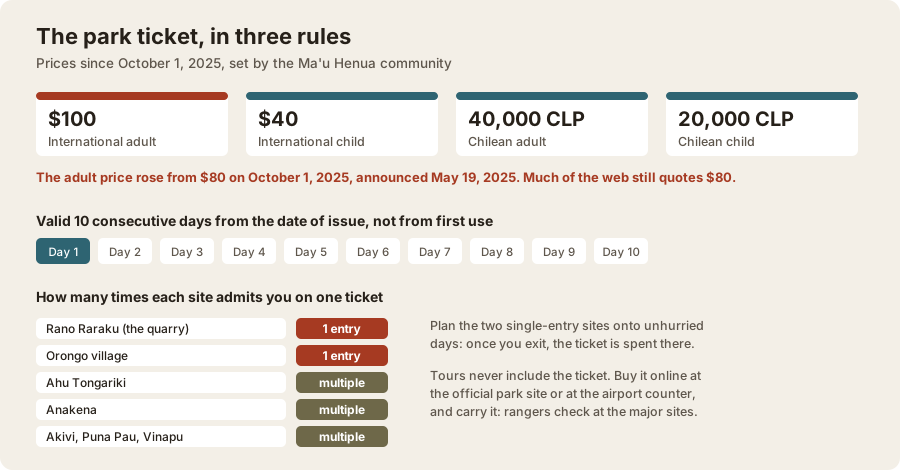
A Rapa Nui National Park ticket costs $100 for a foreign adult and $40 for a foreign child, having risen from $80 on October 1, 2025. Chilean nationals pay 40,000 CLP and 20,000 CLP. It is valid for ten consecutive days, but Rano Raraku and Orongo permit only one entry each.
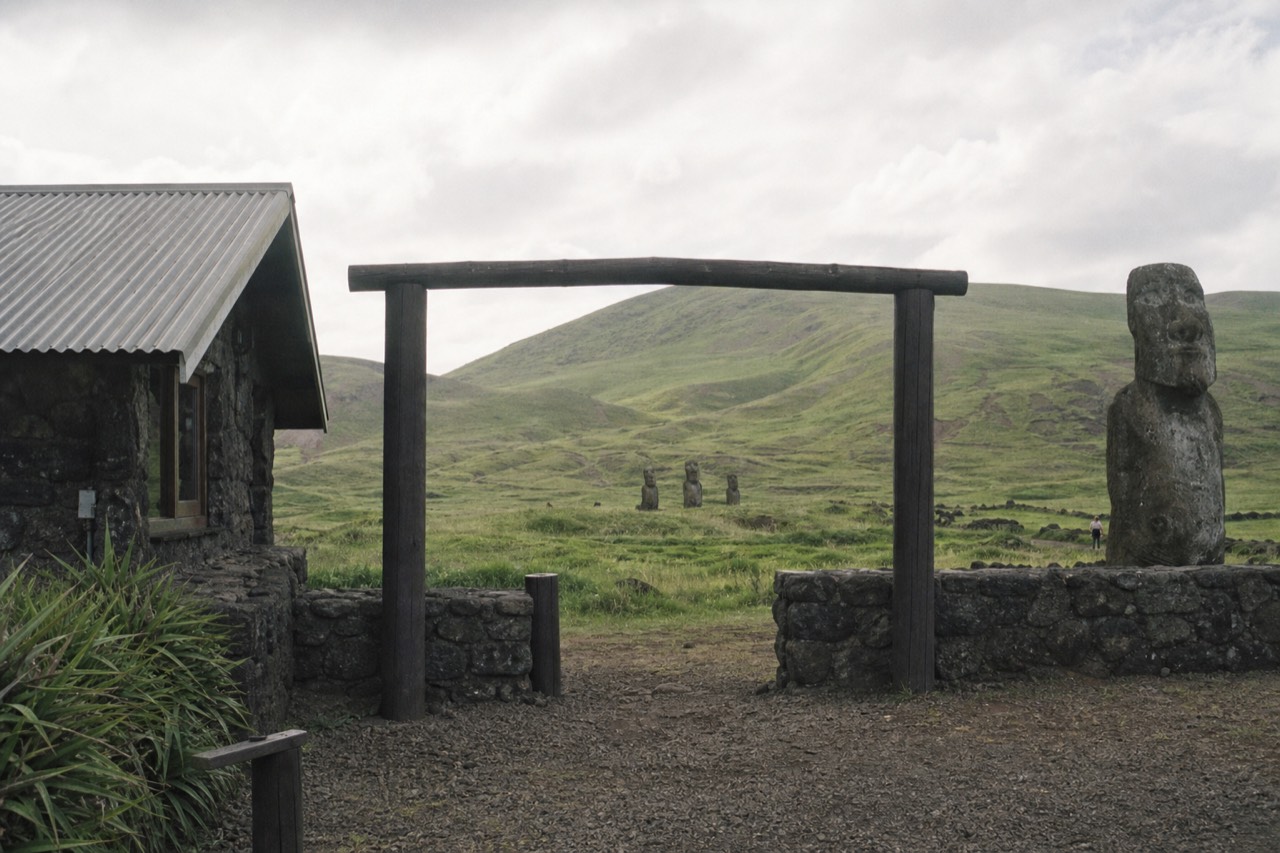
At the ranger post below Rano Raraku, someone scans your ticket, checks the name against your passport, and marks it. That mark is the part almost nobody plans for. It means the quarry is now closed to you for the rest of this trip, whatever the weather did while you were there, however rushed your hour was, no matter that the ticket in your hand is valid for nine more days.
The price gets all the attention and the rules do all the damage. A large share of the travel web still quotes $80 for a foreign adult, a figure that stopped being true on October 1, 2025. Worse, the pages that have updated the number usually still describe the ticket as a straightforward ten-day pass, which it is not. Two of the island's most important sites are one-shot visits, and building an itinerary without knowing that is how people fly eleven thousand miles and see the quarry in the rain, once.
What does a Rapa Nui National Park ticket cost in 2026?
$100 USD for a foreign adult and $40 for a foreign child. Chilean nationals pay 40,000 CLP for an adult and 20,000 CLP for a child. Every person needs their own ticket, including children. The price rose from $80 on October 1, 2025, and no guided tour on the island includes it.
| Visitor type | Current price | Currency as sold |
|---|---|---|
| International adult tourist | $100 | USD |
| International child tourist | $40 | USD |
| Chilean national, adult | 40,000 CLP | Chilean pesos |
| Chilean national, child | 20,000 CLP | Chilean pesos |
| Everyone, per person | One ticket each | No family or group rate |
| Included in tours | Never | Bought separately in all cases |
The two-tier structure is not unusual for a protected site with a resident indigenous population, and the gap between the rates is wide enough to be worth understanding rather than resenting. Rapa Nui National Park is administered by the Ma'u Henua Indigenous Community, and the ticket is sold by that community rather than by a national agency. The October 2025 adjustment was announced by Ma'u Henua on May 19, 2025, several months ahead of taking effect.
Currency is a small practical trap. The foreign rate is denominated in dollars, the national rate in pesos, and around $100 you will occasionally see a peso-equivalent figure quoted instead, roughly in the mid-90,000s CLP depending on the exchange rate that week. If a listing shows you a peso number that looks close to the dollar rate, it is the same ticket, not a discount.
For a couple, this is $200 before anyone has hired a car or booked a guide, and for a family of four with two children it is $280. That is a meaningful line in the budget of a trip that is already expensive to reach, and it is the item most often missing from the spreadsheets people build from older blog posts. The full 2026 trip budget puts it next to the flights, lodging and transport so the total stops surprising people.
Why does so much of the web still say $80?
Because the increase was announced in May 2025 and took effect on October 1, 2025, and a great deal of travel content has not been touched since. The $80 figure was correct for years, which is exactly why it propagated. Anyone budgeting from a stale page arrives $20 per adult short.
| What changed | Before October 1, 2025 | From October 1, 2025 |
|---|---|---|
| Foreign adult | $80 | $100 |
| Foreign child | Lower child rate applied | $40 |
| Chilean adult | National rate applied | 40,000 CLP |
| Validity | 10 consecutive days | 10 consecutive days, unchanged |
| Rano Raraku entries | Single entry per ticket | Single entry per ticket, unchanged |
| Orongo entries | Single entry per ticket | Single entry per ticket, unchanged |
| Announced by | Ma'u Henua Indigenous Community | Announcement dated May 19, 2025 |
The useful thing about that table is the right-hand column's monotony. Only the price moved. Every structural rule that shapes an itinerary, the ten-day clock and the two single-entry sites, carried over unchanged, which means a good older guide is still right about how the ticket behaves even where it is wrong about what it costs.
There is a second reason the old number sticks around, and it is more interesting than laziness. Tour operators, hotels and aggregator pages often quote the park fee as context inside a longer article, buried in a paragraph about what is not included. Those mentions never get revisited when a price changes, because nobody thinks of them as price pages. The result is that the stale figure keeps circulating through content that is otherwise accurate and current.
If you want the primary record rather than a summary, the announcement of the entrance price adjustment sets out the change and its timing, and the park's own ticket site sells at the current rate. Between those two, any figure you see elsewhere can be checked in about a minute.
How long is the ticket valid, and where does single entry apply?
Ten consecutive days from the date of issue. Within that window most sites can be revisited freely, but Rano Raraku and Orongo allow one entry each per ticket. The clock runs on calendar days rather than visit days, so a ticket bought on arrival expires whether or not you used it.
| Site | Entries allowed per ticket | Why it matters |
|---|---|---|
| Rano Raraku, the quarry | One only | Hundreds of unfinished moai on the slope, the island's densest site |
| Orongo, the ceremonial village | One only | Crater rim of Rano Kau, birdman village, petroglyphs |
| Ahu Tongariki | Multiple within the ten days | Makes a separate sunrise visit possible |
| Anakena and Ahu Nau Nau | Multiple within the ten days | Beach day and archaeology in the same place |
| Ahu Akivi, Puna Pau, Vinapu | Multiple within the ten days | Inland sites usually paired on a second circuit |
| Tahai, Hanga Roa town | No park ticket needed | The practical exception for unguided evenings |
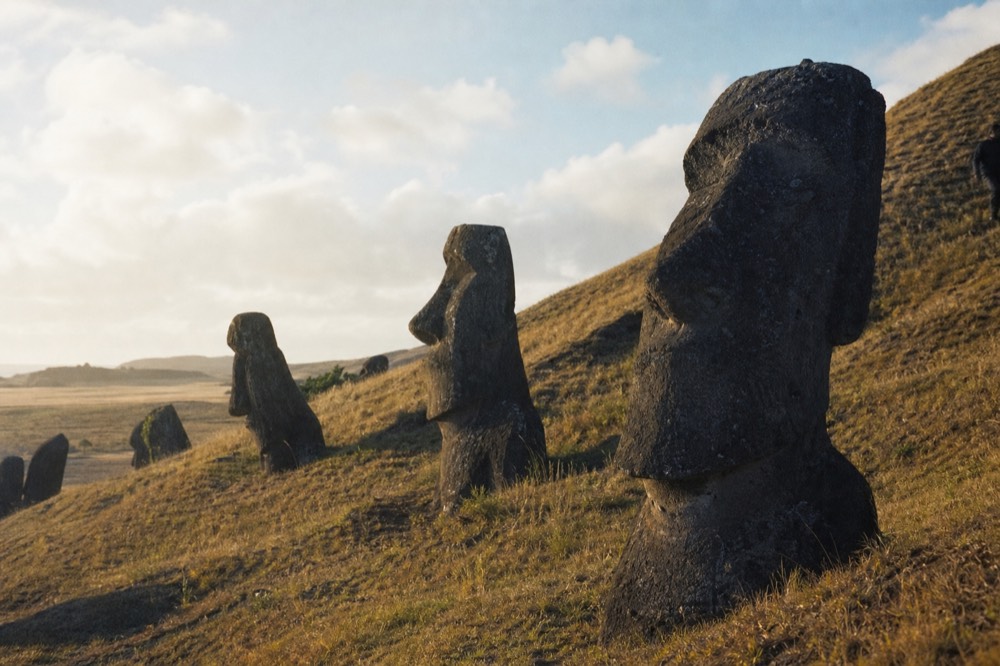
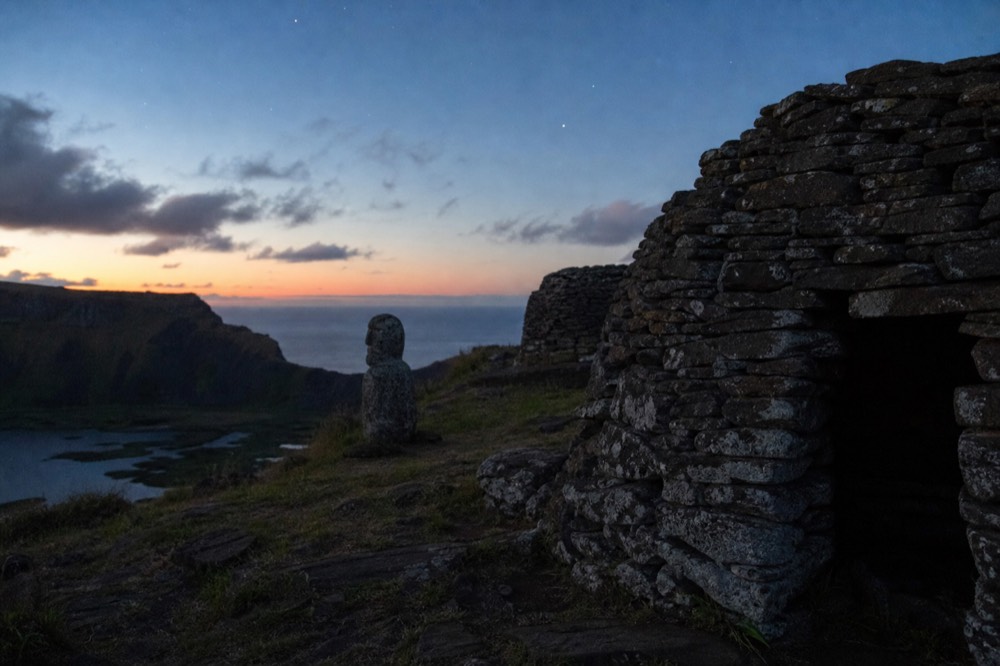
The single-entry rule at those two sites is the single most consequential piece of information on this page. Rano Raraku is where the moai were carved, and where several hundred remain in every stage of completion, standing at drunken angles in the volcanic slope. Orongo sits on the rim of the Rano Kau crater and holds the stone village of the birdman cult. They are the two places most people would happily visit twice, and the ticket says once.
The ten-day clock has its own quirk. It runs from issue, not from first use, which is a genuinely important distinction for anyone buying online well before the trip. Buy the ticket the week before you fly and you have burned days of validity on your sofa. For a normal four or five night visit this rarely bites, but travelers stringing the island into a longer Chilean itinerary should time the purchase to the arrival date rather than the booking date.
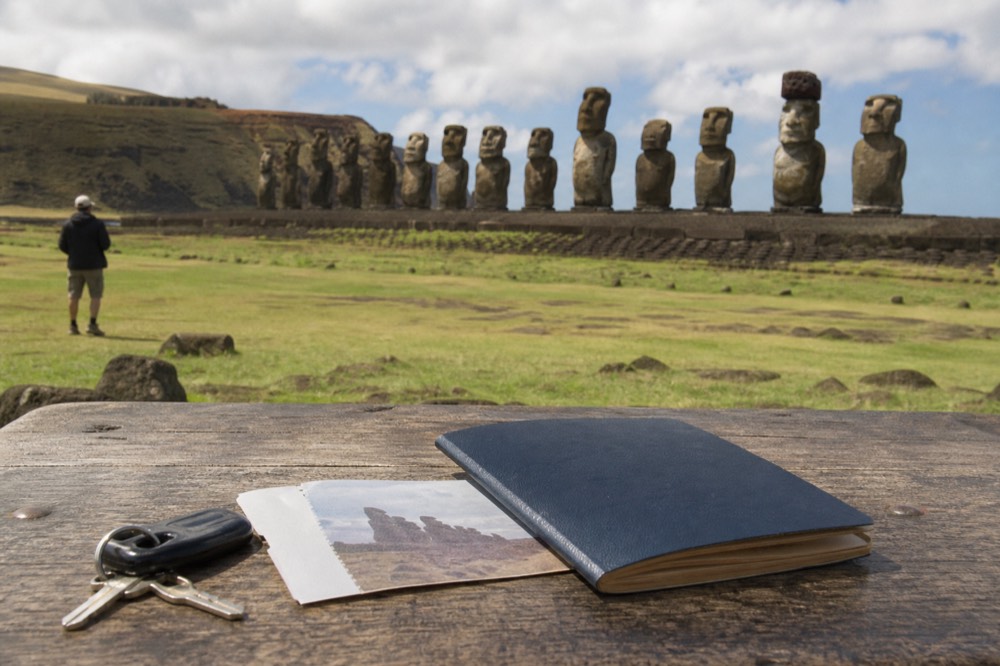
Site hours shape the plan too. Park sites generally operate from around 6:00 in the morning until 7:00 in the evening, and Ahu Tongariki opens at 6:00 specifically so that dawn visitors can be in position. Sunrise there falls between roughly 6:30 in the austral summer and 7:30 in the depth of winter. Because Tongariki is not single-entry, a sunrise visit and a daytime circuit visit both fit under one ticket, which is precisely why the sunrise product exists as a separate outing.
Where do you buy the ticket, and when should you?
Online at the official park site before you travel, or at the counter at Mataveri airport when you land. Online is faster and avoids the arrival queue, since every foreign adult on the flight needs one. Bring your passport either way, because the ticket is issued in your name and checked against it at site entrances.
| Where | How it works | Best for |
|---|---|---|
| Official park website, in advance | Bought per person, issued in the buyer's name | Almost everyone, skips the arrival queue |
| Mataveri airport counter on arrival | Staffed for arriving flights, card or cash | Late deciders and anyone with a changed date |
| Through a tour operator | Not available, tours never include the ticket | Nobody, the ticket is always separate |
| At a park site entrance | Not the usual purchase point | Do not plan on it |
| Resale or third-party listing | Not a legitimate channel | Avoid entirely |
Buying at the official park ticket site is the clean path. One ticket per person, name attached, valid ten consecutive days from issue. The airport counter is a real alternative rather than a fallback, because it is staffed for arriving flights and the terminal is small, but it is still a queue that everyone else on your aircraft is also joining after five and a half hours in the air.
The name-and-passport detail catches a few people out. This is not a transferable paper stub. Rangers check the ticket against identification at site entrances, so you cannot buy one ticket and rotate it through a group, and you cannot hand your unused entry at Rano Raraku to a friend arriving next week. Children need their own $40 tickets on the same terms.
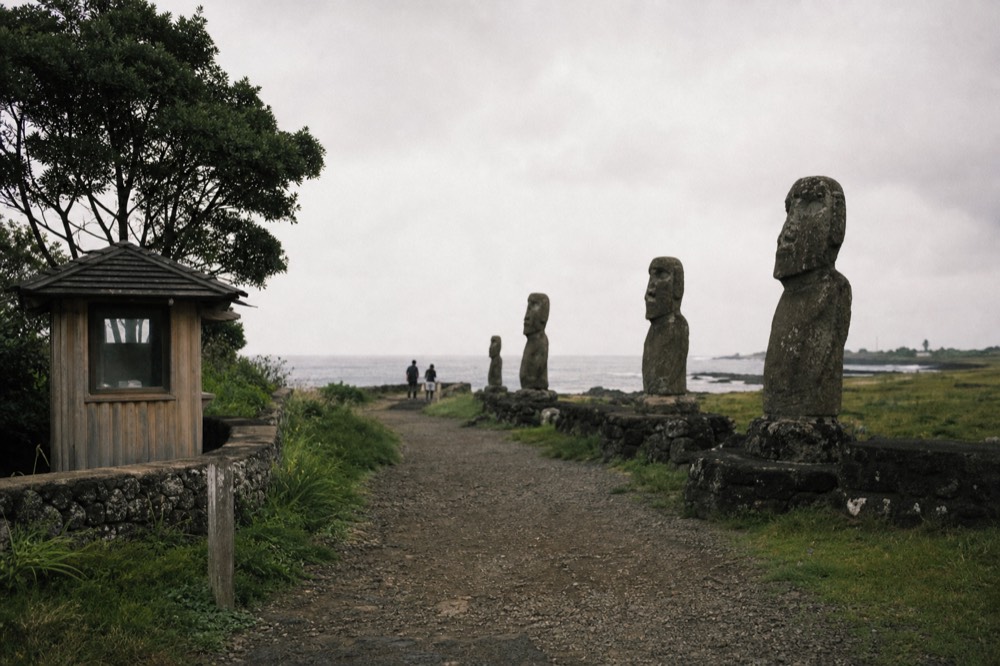
One timing note that is easy to get right and annoying to get wrong. If your trip has any chance of shifting, because of a connection through Santiago on a thin route, buy on arrival rather than months out. The ticket's ten-day clock does not care why your dates moved. Getting to the island at all is its own small project, and the flight, fare and paperwork logic behind those dates explains why the schedule is the fragile part of the trip.
Do you need a guide as well as a ticket?
Yes. Entry to Rapa Nui National Park sites requires an accredited guide certified by Ma'u Henua. The ticket alone does not admit you. Sites cannot be visited independently, which is why the guided full-day circuits exist, and why a rental car is transport rather than a substitute for a tour.
The guide rule is the second thing that stale content gets wrong, and it changes the entire shape of a trip. Travelers who picture renting a Jimny and pottering between platforms on their own schedule are describing an island that no longer operates that way. Access to the park's sites runs through accredited guides, and the ticket is the fee, not the permission.
There are practical exceptions that keep an unguided afternoon possible. The Tahai complex on the edge of Hanga Roa, the town itself, and the beach at Anakena are where people go without a guide, which is why so many visitor photographs of sunset moai come from Tahai. Those are not loopholes, they are simply areas where the rule works differently, and they are useful for filling arrival evenings and departure mornings.
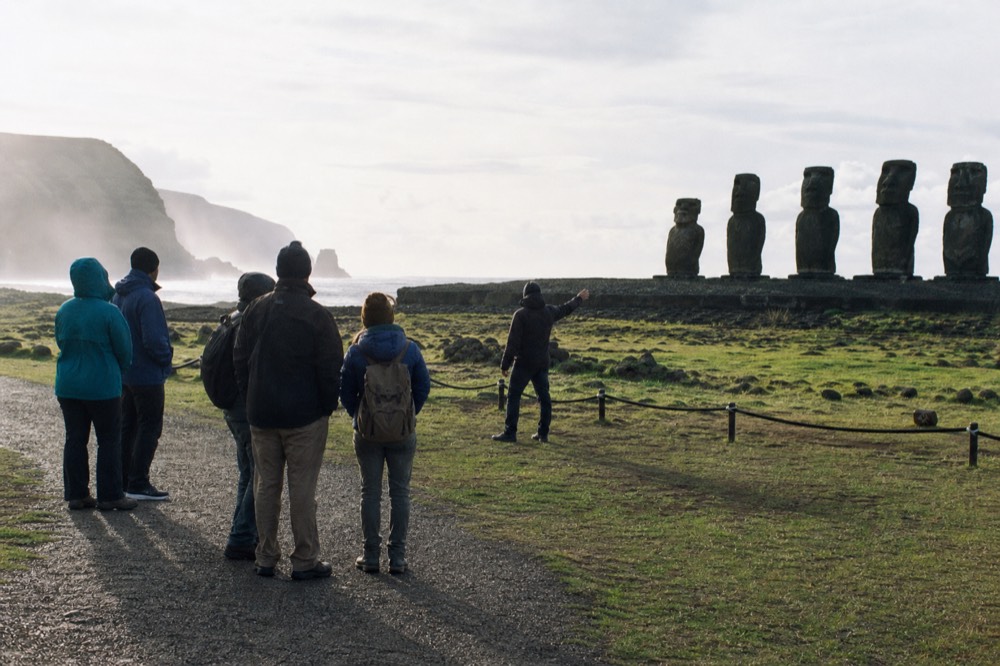
For most visitors the rule is a feature rather than a constraint, though that is easier to say once you have accepted the cost. A slope of several hundred unfinished statues means nothing without someone to explain why they were abandoned mid-carving, and the ropes and paths exist for reasons that a guide will make obvious in about ninety seconds. The wider story of the moai is what a good guide is actually delivering, and why touching them is prohibited turns out to be a conservation question rather than a superstition.
The booking implication is simple. Because the guide is mandatory and the ticket is not included, every visitor is paying for both, so the question is never whether to book a guided day but which one. Travelers who want the classic arc, south coast to quarry to Tongariki to Anakena, should see what the full-day circuit costs on their dates before committing the single Rano Raraku entry to anything else.
What does the ticket not cover?
Transport, guides, food, and everything outside the park's boundaries. It also does not cover the FUI entry form, which is separate and mandatory, or the flight. The $100 buys site access only, and site access is not usable without an accredited guide, so it is a floor rather than a total.
| Not covered by the park ticket | What it actually costs | Where it is handled |
|---|---|---|
| Accredited guide | Included in every guided tour price | Booked through a tour operator |
| Transport to sites | Taxi $20 to $30 each way, scooter $35 to $50 a day, 4WD $60 to $115 a day | Rented or included in a tour |
| Lunch and drinks on circuit days | Mid-range dinner runs $20 to $40 a head | Paid on the day |
| FUI entry form | Free, but mandatory before boarding | Filed online in advance |
| Flights | $342 to $504 round trip typically in 2026 | Booked separately |
| Accommodation | Must be Sernatur-registered to enter the island | Booked before filing the FUI |
Set out that way, the ticket looks less like an entrance fee and more like one component in a stack. A single guided full-day circuit plus the ticket puts a solo traveler at roughly $220 before a bed or a meal, and that is the genuine cost of seeing the island's headline archaeology properly rather than the sticker price of the park.
The FUI confusion is worth clearing up because the two documents get conflated constantly. The park ticket is a fee for a protected archaeological site. The FUI is an entry-control form for the territory, required of every visitor including Chileans, filed online before your flight, and free. Having one does not give you the other, and arriving without the FUI means not boarding at all.
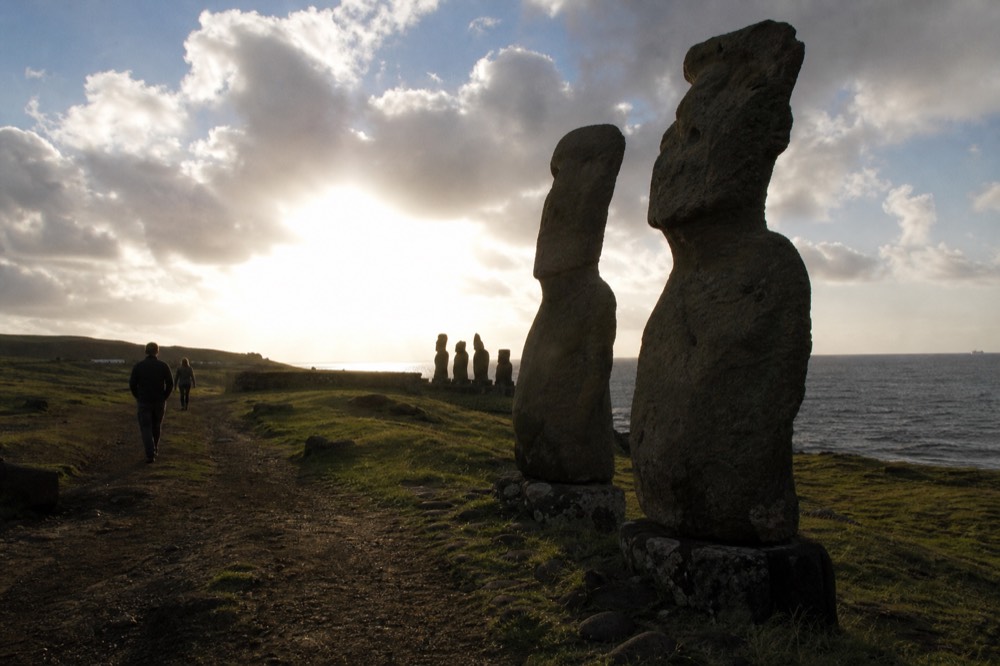
Transport is where budgets quietly inflate. A taxi to Tongariki and back is $40 to $60 for the pair of trips, before you have paid a guide, which is why self-driving to sites you cannot enter alone rarely saves money. Booking a circuit that includes vehicle, pickup and guide in one price is usually cheaper than assembling the same day from parts, and it is always simpler.
How do you plan around the two single-entry sites?
Decide in advance which day each single-entry site belongs to, and give the quarry the better weather window. Rano Raraku sits on a standard south-coast circuit and Orongo on the Rano Kau circuit, so a two-day booking spends both entries cleanly. One-day visitors must choose between them.
| Trip shape | Rano Raraku | Orongo | Verdict |
|---|---|---|---|
| One full day only | Covered on the south-coast circuit | Missed entirely | Accept the trade, take the quarry |
| Two full days | Day one, south-coast circuit | Day two, Rano Kau and birdman circuit | Both entries used, nothing wasted |
| Three days with sunrise | Day one circuit | Day two circuit | Day three is Tongariki at dawn, no single entry burned |
| Private full day | Covered, at your own pace | Depends on the itinerary you set | Confirm which sites are included before booking |
| Independent, no guide | Not accessible | Not accessible | Guided access is mandatory at both |
| Bad weather on quarry day | Entry already used | Unaffected | The reason not to spend it on arrival day |
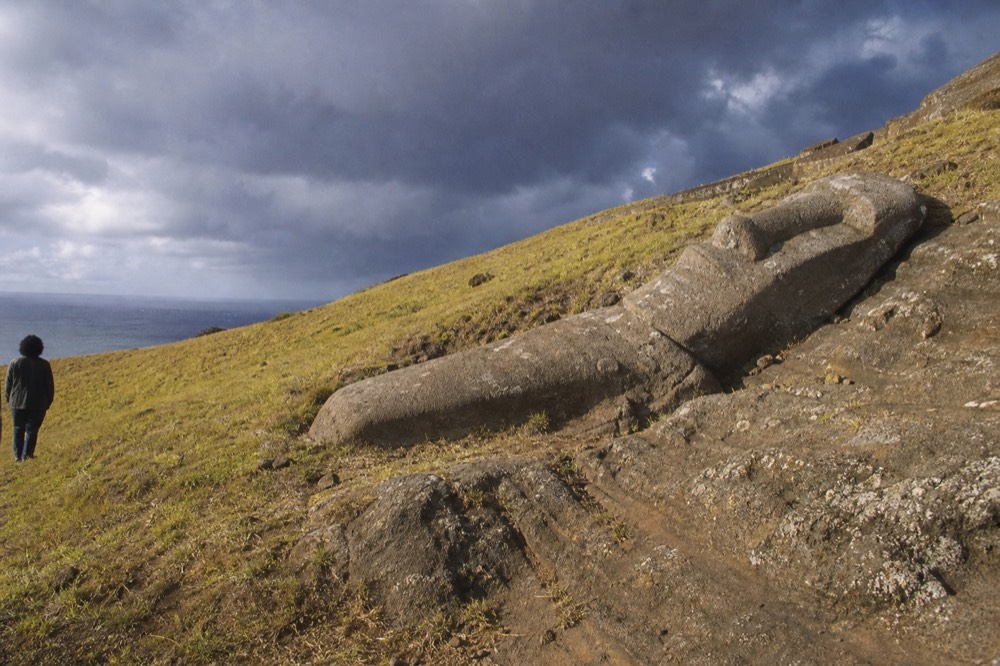
The weather clause is the piece experienced visitors care most about. Rano Raraku is an open volcanic slope with no shelter, and rain turns a once-only visit into a wet walk past shapes in the mist. If your trip has two full days and the forecast is lopsided, put the quarry on the better one and take Orongo in the weather. Orongo's drama is the crater and the stonework, which cloud does not ruin nearly as thoroughly.
There is another reason to give the quarry your best day. The 2022 fire that swept Rano Raraku scorched dozens of moai, with reports putting the number around eighty. Access has been restored and the site is open, but the scarring remains visible and conservation work continues. It is a more complicated place to look at than it was, and one visit in poor light is not enough time with it. Reporting on the community-led restoration effort covers what that work involves.
For most travelers the cleanest solution is structural rather than tactical: book a two-day package that puts one single-entry site on each day, so neither entry is left to chance. That is exactly what the two-day itinerary covering both circuits is built to do. Anyone whose priority is specifically the birdman village and the crater should instead look at a day built around Orongo and the caves and spend the Rano Raraku entry elsewhere in the week. The wider two and three day packages all follow the same split for the same reason.
What happens if you break the park rules?
Fines run from 5 to 100 monthly tax units under Chile's national monuments law, Law 17.288. Touching or climbing on moai and ahu is prohibited, drones need authorization, and camping, fires, pets, alcohol and smoking are not permitted at park sites. The rules are enforced by rangers, not posted as suggestions.
| Rule | What is prohibited | Why it exists |
|---|---|---|
| No touching moai or ahu | Contact with statues and platforms, climbing on ahu | Surface erosion and structural damage, plus sacred status |
| Stay on marked paths | Walking off route on site slopes | Soil erosion around buried statue bodies |
| No drones without permit | Unauthorized flying over park sites | Heritage protection and disturbance |
| No camping or fires | Overnight stays and open flame at sites | Fire risk, demonstrated at Rano Raraku in 2022 |
| No pets, alcohol or smoking | Bringing animals, drinking, smoking at sites | Site protection and cultural respect |
| Fines | 5 to 100 UTM under Law 17.288 | Chile's national monuments framework |
UTM stands for unidad tributaria mensual, an inflation-indexed Chilean unit used for penalties, so the fine scale adjusts over time rather than being fixed in pesos. The practical point is the range: the low end is an unpleasant afternoon and the high end is a serious financial event, and the difference is usually how much damage was done and whether it was deliberate.
The rules that look fussy are the ones with the clearest reasoning behind them. Many moai at the quarry have full bodies buried under centuries of silt, so soil compaction from off-path walking is a genuine conservation problem rather than a tidiness preference. Skin oils and repeated contact wear volcanic tuff faster than weather does, which is why the no-touching rule is absolute rather than discretionary.
Enforcement is real and it is local. Rangers work the sites, ticket checks happen at entrances, and the community that manages the park is also the community that lives with the consequences of damage. Whatever it says about the wider World Heritage protections that cover the island, the day-to-day version is much simpler: stay on the path, keep your hands off the stone, and the rules never come up.
Common questions
Is the Rapa Nui National Park ticket included in tour prices?
No. Every guided tour on the island prices the guide and transport separately from the park ticket, and none of them include it. You buy the $100 foreign adult ticket, or $40 child ticket, either online at the official park site before travelling or at the counter at Mataveri airport on arrival.
Can you visit the park sites without a guide?
No. An accredited guide certified by the Ma'u Henua Indigenous Community is required to enter Rapa Nui National Park sites, so the ticket alone does not admit you. The practical exceptions people can do independently are the Tahai complex on the edge of Hanga Roa, the town itself, and the beach at Anakena.
What happens if you try to enter Rano Raraku twice?
You will be turned away. The ticket is scanned and checked against your identification at the entrance, and both Rano Raraku and Orongo record a single entry per ticket regardless of how many days of validity remain. There is no second-visit surcharge and no way to reset it short of buying an entirely new ticket.
Do children need their own park ticket?
Yes. Foreign children need a $40 ticket and Chilean children a 20,000 CLP ticket, issued in their own name on the same terms as an adult. There is no family rate. The same ten-day validity and single-entry limits at Rano Raraku and Orongo apply to a child's ticket.
When exactly does the ten-day validity start?
From the date the ticket is issued, not from your first site visit. That distinction matters if you buy well ahead of travel or if you are fitting the island into a longer Chilean trip, because days of validity can expire before you land. For a normal four or five night stay bought close to travel, it is rarely an issue.
Can you buy the park ticket when you arrive at the airport?
Yes. A counter at Mataveri is staffed for arriving flights and sells the same ticket at the same price, with card or cash. The trade is a queue, since every foreign adult on your aircraft needs one, so buying online beforehand is faster if your dates are already firm.