Best time to visit Easter Island: a month-by-month read for 2026-2027
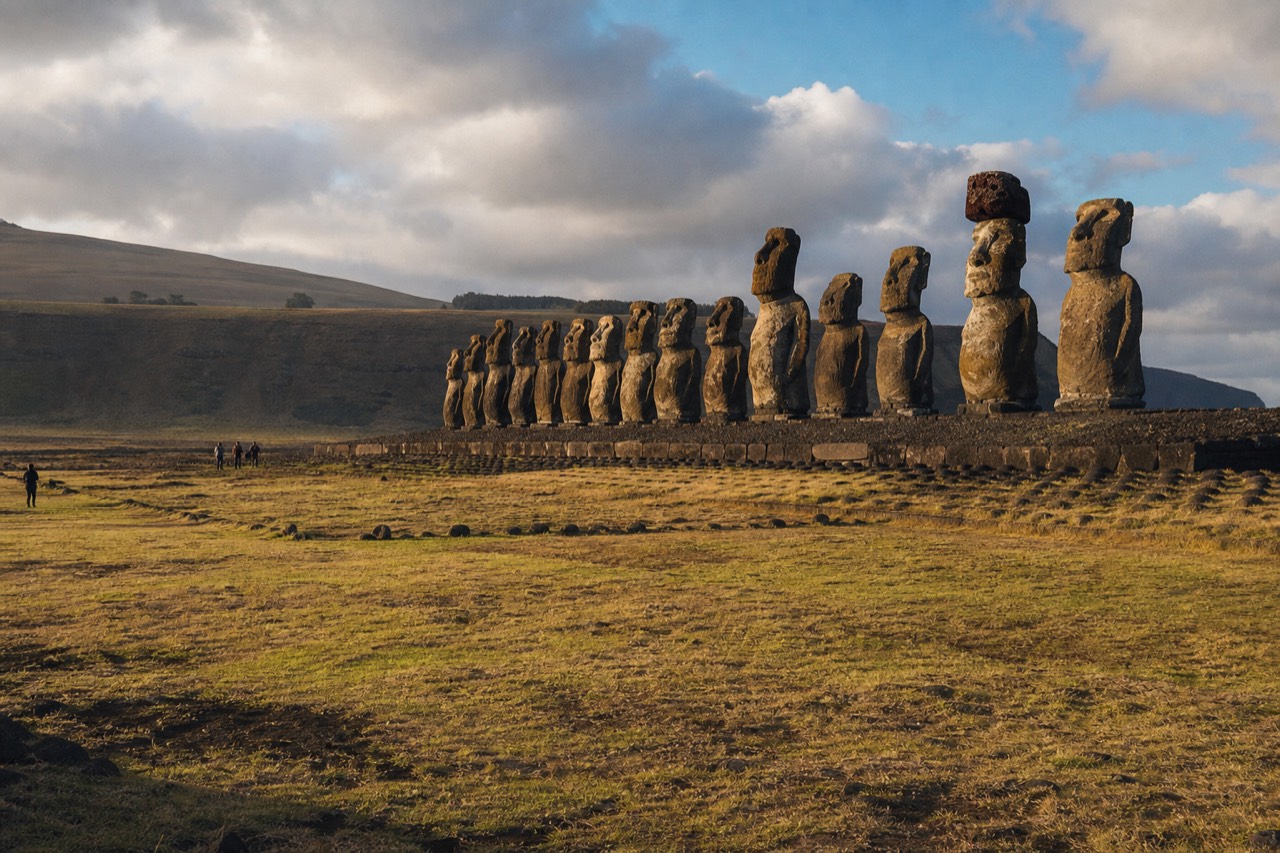
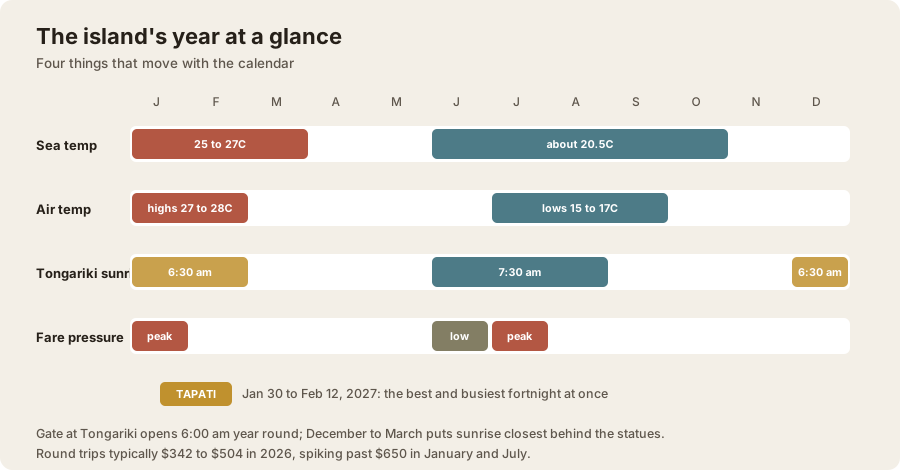
Sunrise at Ahu Tongariki lands around 6:30 in December and closer to 7:30 in June, and almost every other decision about when to fly here follows from that one swing.
Short answer
March and October are the strongest all-round months: the sea is at or near its warmest in early March, air sits close to the 20 to 21 degree annual average, and fares fall outside their January and July peaks. February is the hottest, August the coolest and darkest for stars, and Tapati runs 30 January to 12 February 2027.
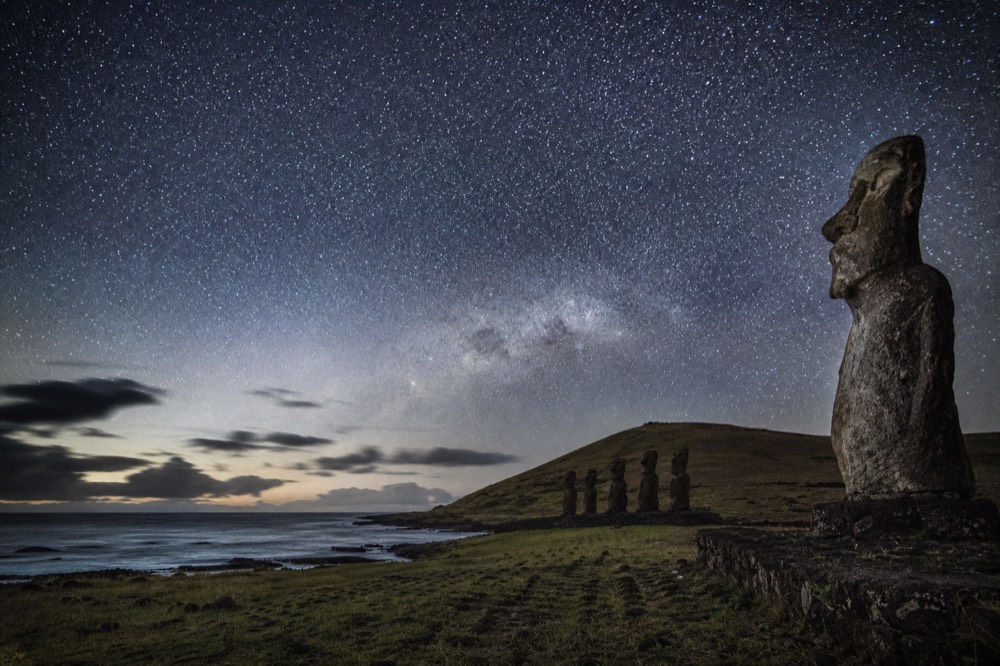
The gate at Ahu Tongariki opens at 6:00 in the morning for people who want to be standing in the dark before anything happens. What time the sun actually clears the horizon behind those fifteen figures depends entirely on the month: roughly 6:30 between December and February, roughly 7:30 between June and August. That hour of drift is the cleanest way to understand the island's calendar, because it tracks everything else that changes here.
Rapa Nui does not have a dramatic climate. Annual average temperature runs about 20 to 21 degrees Celsius, 68 to 70 Fahrenheit, and the gap between the warmest month and the coolest is smaller than most travelers expect from a place this remote. What changes instead is sea temperature, rainfall, daylight, flight prices and how many other people are standing at the quarry with you. Those five things do not peak in the same month, which is why there is no single right answer and why a table is more useful than an opinion.
What is the best month to visit Easter Island?
March and October are the strongest all-round choices. Early March holds the warmest sea of the year at 25 to 27 degrees Celsius while fares have dropped off the January peak. October offers mild air near the annual average, quiet sites and off-peak flights. February is warmest, August coolest and clearest for stars, and January and July are the two expensive months.
| Month | Air | Sea | Sunrise at Tongariki | Fare pressure | What it suits |
|---|---|---|---|---|---|
| January | Full summer, near the year's warmest | Warming toward the March high | About 6:30 am | Peak | Long daylight, early sunrise season |
| February | Warmest of the year, highs around 27-28°C | Close to peak | About 6:30 am | High | Tapati in 2027, swimming, hot afternoons |
| March | Still summer-warm | Year's peak, 25-27°C (77-81°F) in early March | Between 6:30 and 7:30, drifting later | Easing | Best water of the year with thinner crowds |
| April | Mild, close to the 20-21°C annual average | Cooling from the peak | Between 6:30 and 7:30 | Off-peak | Dark-sky season opens; wetter spell |
| May | Mild and cooling | Cooling | Between 6:30 and 7:30 | Off-peak | Very quiet island; wetter spell |
| June | Coolest stretch begins | Cool | About 7:30 am | Among the lowest of the year | Cheapest flights, long dark nights |
| July | Cool, one of the wetter months | Cool | About 7:30 am | Peak | Stargazing; the least beach-friendly month |
| August | Coolest lows, around 15-17°C | Year's low, about 20.5°C (69°F) late in the month | About 7:30 am | Off-peak | Darkest skies, fewest visitors |
| September | Warming | Warming off the low | Between 6:30 and 7:30, drifting earlier | Off-peak | Dark skies still strong, quiet sites |
| October | Mild, close to the annual average | Warming | Between 6:30 and 7:30 | Off-peak | The best-balanced shoulder month |
| November | Warming toward summer | Warming | Between 6:30 and 7:30 | Rising | Long days returning, pre-peak prices |
| December | Summer | Warm | About 6:30 am | Rising into the January peak | Sunrise season, longest evenings |
Read that table by column rather than by row and the shape of the year becomes obvious. The two most expensive months to fly, January and July, sit at opposite ends of the climate. One gives you the warmest air and the earliest sunrise, the other gives you cold rain and a 7:30 dawn. If price is your constraint, the months either side of those peaks deliver almost the same island for meaningfully less.
The one column with a genuinely large swing is sea temperature. From about 20.5 degrees in late August to 25 to 27 degrees in early March is the difference between a brisk dip and an afternoon in the water at Anakena. Anyone whose trip is partly about swimming, snorkeling or diving should treat that column as the deciding one and let the rest follow.
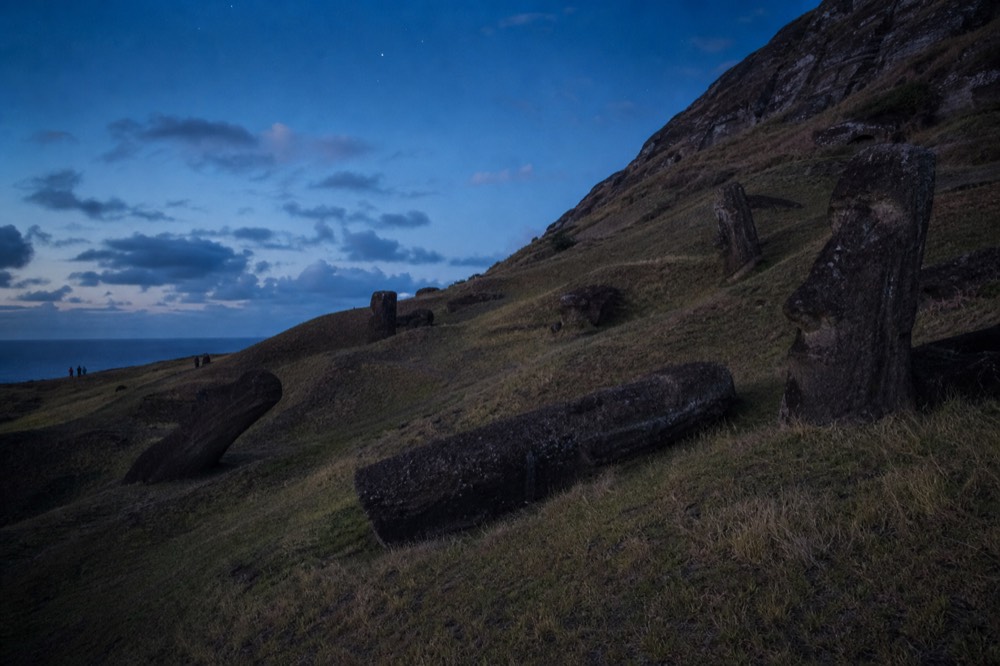
There is also a case for going when nobody recommends it. May and September are quiet, cool enough for long walking days without the summer glare, and put you at the sites with fewer vehicles in the car park. Sites here have no queue system and no timed entry, so the practical measure of a crowd is how many vans are parked at Rano Raraku when you arrive. That number is lowest in the southern winter and highest across January and February.
How much does the weather actually change through the year?
Less than the latitude suggests. The island has a subtropical oceanic climate with a narrow temperature band, warmest highs around 27 to 28°C in February and coolest lows around 15 to 17°C in August. Rain falls in every month with wetter spells around April to May and July, and the trade winds are effectively constant.
| Measure | Current figure |
|---|---|
| Annual average temperature | About 20-21°C (68-70°F) |
| Warmest highs | Around 27-28°C, in February |
| Coolest lows | Around 15-17°C, in August |
| Sea temperature peak | 25-27°C (77-81°F), around early March |
| Sea temperature low | About 20.5°C (69°F), late August |
| Sea temperature, year-round average | Near 20°C |
| Rainfall pattern | Year-round, with heavier spells around April-May and July |
| Wind | Constant trade winds in every season |
| Sea state, south coast | Driven by Pacific swell and wind rather than by month |
The number people misread is the rainfall one. Rapa Nui does not have a dry season in the way a mainland destination does. Rain arrives year-round, often as short squalls that cross the island and clear inside an hour, and the wetter spells are relative rather than absolute. Packing a rain shell in February is as sensible as packing one in July. What changes is how quickly you dry out afterwards.
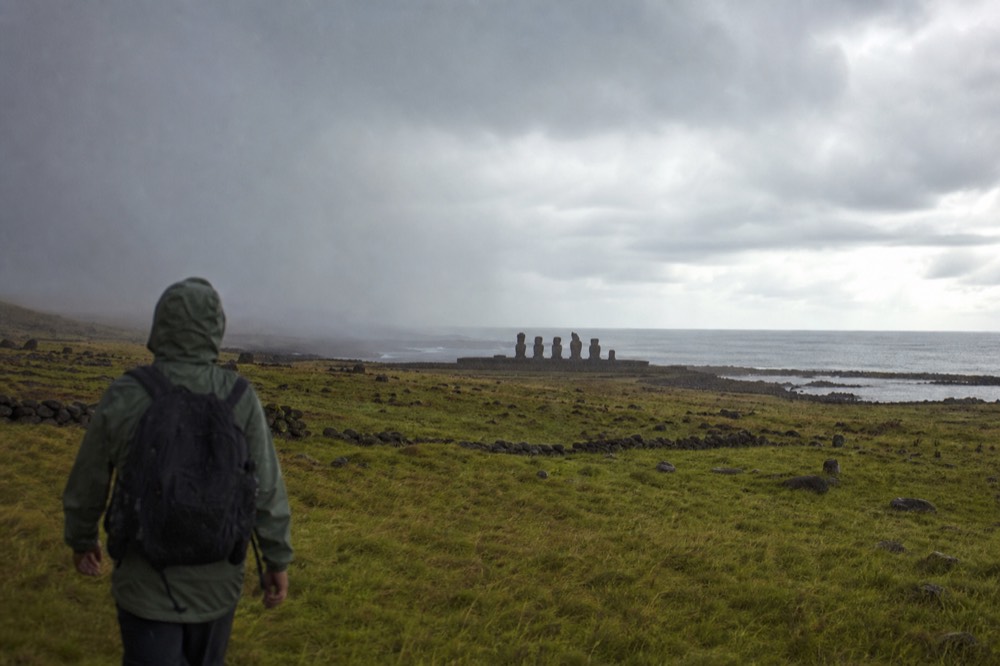
Wind is the underrated variable. The trade winds run all year and there is nothing between here and the open Pacific to slow them down, which means an air temperature of 17 degrees on an exposed headland feels considerably colder than 17 degrees anywhere sheltered. That matters most before dawn at Tongariki and after dark on an astronomy outing, both of which put you standing still in the open for an hour or more.
Sea conditions on the south coast follow swell and wind rather than the calendar, so a given week in December can be rougher than a given week in July. This is the reason serious water plans should stay flexible on the day rather than be locked to a month. The east and north sides, where Anakena sits, are the sheltered option when the south is working.
Nothing in that table argues for avoiding a month outright. The honest read is that Rapa Nui is a year-round destination with a narrow comfort band, and the real decisions are about water, darkness, price and crowds rather than about whether you will be warm enough.
Which season fits your reason for going?
Match the month to your single strongest reason for coming. Sunrise at Tongariki favours December to March, the clearest stargazing runs April to October, warm-water swimming peaks in early March, the lowest fares sit in the off-peak months around June, and the emptiest sites are in the southern winter.
| Your reason for going | Best window | Why | The trade-off |
|---|---|---|---|
| Sunrise behind the moai at Tongariki | December to March | Earliest dawn, around 6:30 am, and the operator's own strongest-alignment window | Peak-season fares in January and February |
| Stargazing and the southern sky | April to October | Clearest skies of the year; sessions run around the moon calendar | Cool, windy nights and a later sunrise |
| Swimming and snorkeling at Anakena | Late February to March | Sea at 25-27°C, its annual peak | Warmest, busiest, most expensive stretch |
| Diving | December to March | Warmest water; less wetsuit needed | Conditions still depend on daily swell |
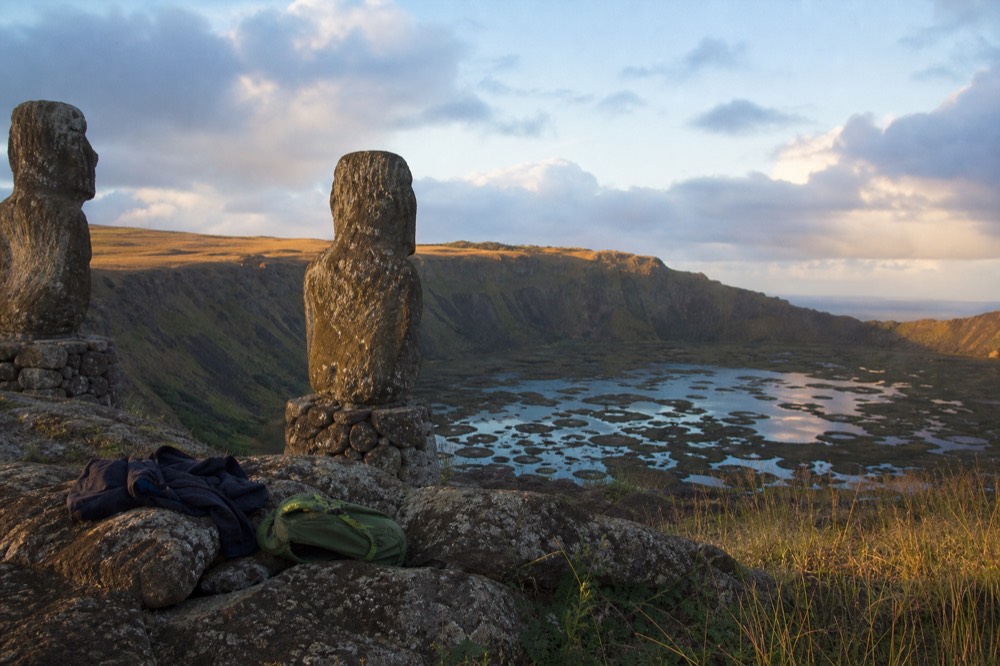
| Hiking Rano Kau and the crater rim | April to October | Cooler air for exposed walking, less glare | Higher chance of a wet day |
| Rapa Nui culture at full volume | 30 January to 12 February 2027 | Tapati, the island's own festival | Accommodation is limited and prices climb |
| The lowest flight cost | Off-peak months including June | Fares trend lowest away from January and July | Coolest air and shortest days |
| The fewest other people | June to September | Southern winter, thinnest visitor numbers | Cold pre-dawn starts, cooler sea |
Two of those rows pull in opposite directions and are worth stating plainly. The sunrise months and the stargazing months barely overlap. December to March gives you the earliest, most dramatic dawn at Tongariki. April to October gives you the clearest nights for the southern sky. A trip built around both has to accept a compromise, and the usual compromise is late March or early April, when dawn is still reasonably early and the sky is starting to settle.
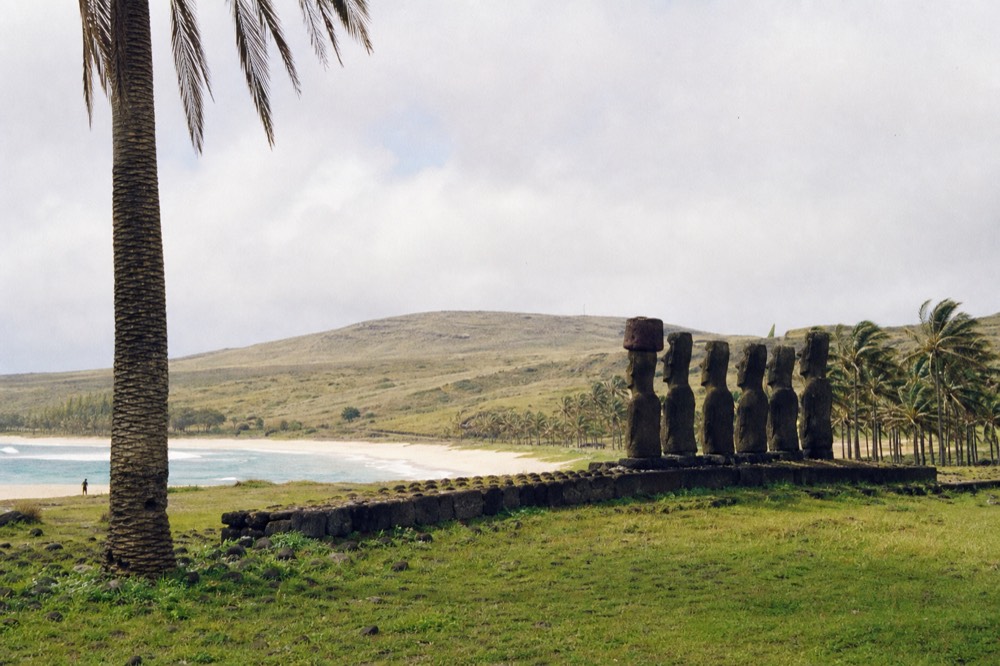
The water rows deserve a caveat that most seasonal guides skip. The palms at Anakena were planted in 1960 and the beach today has restaurants, vendors, kiosks and picnic areas alongside the moai of Ahu Nau Nau, so it functions as a proper beach day rather than a quick photo stop. In March that is genuinely appealing. In August, with the sea at 20.5 degrees and wind coming off the Pacific, most people take the photograph and keep their shoes on.
For anyone whose whole trip hangs on the dawn, the practical move is to build the itinerary around a dedicated sunrise outing rather than hoping to fit one in. It is worth checking which dawn departures are open across your travel window before you lock the flights, because the dedicated sunrise product runs on fixed days rather than daily.
When is the Tongariki sunrise at its best?
Between December and March, when dawn falls around 6:30 am and the operator running the dedicated dawn outing puts its strongest window. The site opens at 6:00 am specifically for dawn visitors, and general park hours run roughly 6:00 am to 7:00 pm. Unlike Rano Raraku and Orongo, Tongariki is not a single-entry site, so you can return.
| Window | Approximate sunrise | Gate opens | What it means for your morning |
|---|---|---|---|
| December to February | About 6:30 am | 6:00 am | Leave Hanga Roa around 5:30; back in town for a normal breakfast |
| March to May | Drifting later through the 6:30 to 7:30 band | 6:00 am | Gentler start, cooler standing, sun rising off the summer angle |
| June to August | About 7:30 am | 6:00 am | The easiest wake-up of the year, and the coldest wait |
| September to November | Drifting earlier through the band | 6:00 am | Progressively earlier starts as summer returns |
The honest caveat is that no published source pins the exact dates on which the sun rises directly behind the moai, and any guide that gives you a precise alignment calendar is guessing. What is documented is the sunrise time range, the 6:00 am opening for dawn visitors, and the operator's own statement that the effect is most dramatic from December to March. Plan on that basis and treat a perfect alignment as a bonus rather than a booking criterion.
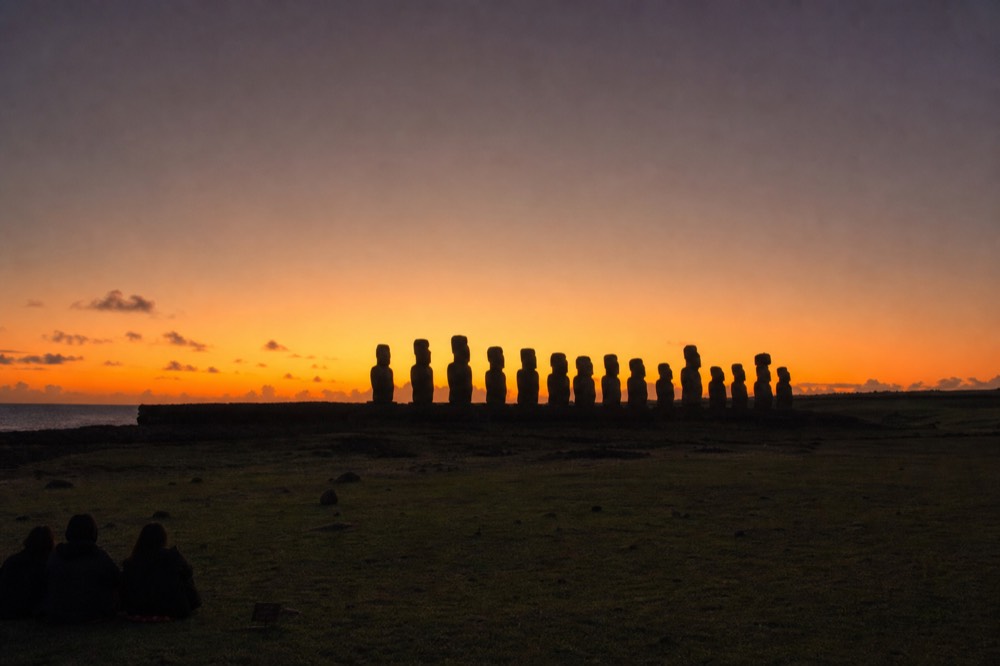
There is a practical reason the dawn outing tends to come attached to a multi-day package rather than sold as a standalone hour. Park entry needs an accredited Ma'u Henua guide, so a private dawn trip means a guide out of bed at 5:00 am for a single stop. The three-day package that pairs two full circuits with a dedicated sunrise run solves that economically, which is why it exists in that shape.
Dress for the wait rather than the day. A summer dawn at Tongariki still means standing in open wind for forty minutes before anything happens, and the temperature at 6:00 am has nothing to do with the 27 degrees the afternoon will deliver. Every experienced visitor brings a layer they later carry around in a daypack.
If the dawn is the whole point of the trip, December to March also gives you the longest evenings, which means a single day can carry a sunrise at Tongariki, a full circuit, and still leave light for the walk out to Tahai. That density is why the summer months justify their fares for some travelers and not for others.
Is Tapati Rapa Nui worth planning around?
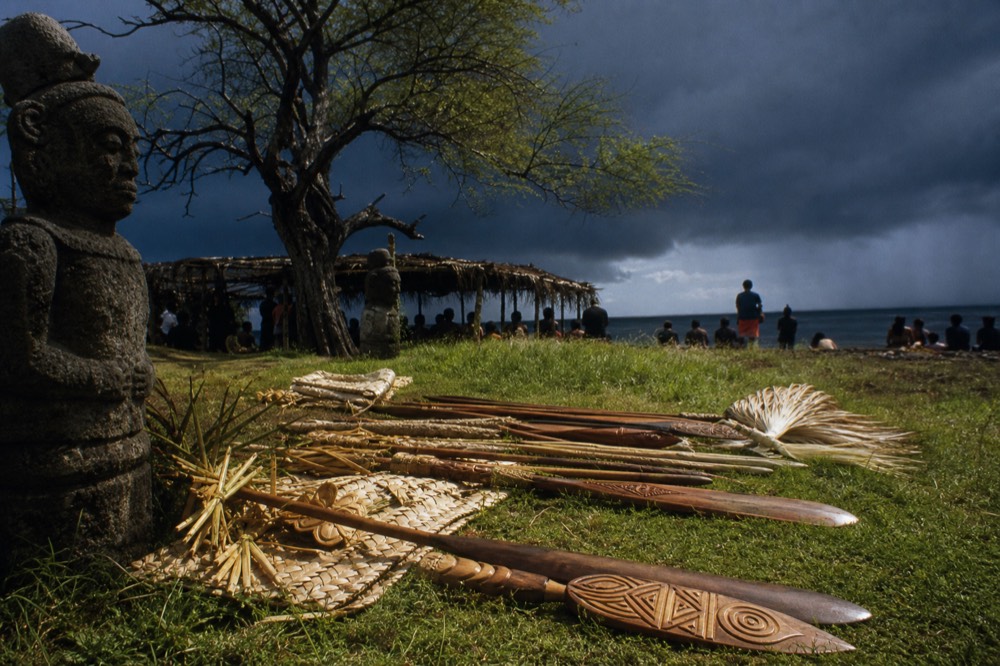
Tapati Rapa Nui 2027 runs 30 January to 12 February, the 59th edition, with more than forty cultural and artistic activities and competitions. It is the single best fortnight to see Rapa Nui culture rather than Rapa Nui archaeology. It is also the hardest fortnight to book, on an island where accommodation is limited and demand pushes prices up.
| What you are weighing | Going during Tapati | Going outside it |
|---|---|---|
| Culture | Two weeks of competitions, music and traditional events, 40+ activities | The sites and everyday island life, but no live festival programme |
| Accommodation | Limited stock, high demand, prices climb; early booking strongly advised | Normal availability, normal rates |
| Flights | Falls inside the January to early February fare peak | Off-peak fares in most other months |
| Tour availability | Vehicles and guides in heavy use; book everything ahead | Same-week booking is usually possible |
| Weather | Warmest air of the year, sea near its March peak | Depends entirely on the month you pick |
| Site experience | Archaeological sites busier alongside festival crowds | Quietest at the sites in the southern winter |
The scheduling detail that catches people out is that Tapati straddles two months. A trip planned for "early February 2027" lands inside the festival whether or not that was the intention, and a trip planned for "late January" catches the opening. If the festival is the goal, that is convenient. If cheap flights and quiet sites are the goal, aim clear of 30 January to 12 February entirely, and remember that demand builds before the opening date rather than starting on it.
Booking order matters more than usual for these dates. Accommodation is the binding constraint, not flights, because the island has one town and a finite number of registered beds. Anyone targeting Tapati should secure a bed first, then the flight, then the guided days. The published Tapati 2027 programme and dates are the reference to work from, and where beds actually are in Hanga Roa covers the registration rule that turns a booking into a boarding pass.
One thing Tapati does not change is the park system. The $100 adult ticket, the ten consecutive days of validity, the single-entry rule at Rano Raraku and Orongo and the accredited-guide requirement all apply during the festival exactly as they do in September. Festival visitors sometimes assume the archaeological days will be disrupted. They are not, they are simply busier.
When are crowds and fares highest?
January and July are the expensive months to fly; off-peak months including June trend lowest. 2026 round trips from Santiago typically run $342 to $504, with spikes above $650. Booking around ten weeks out saves roughly 27 percent against last-minute. Crowds follow the southern summer, so June to September puts the fewest people at the quarry.
| Window | Fare pressure | Crowd pressure | Sensible booking lead time |
|---|---|---|---|
| January | Peak | High, climbing toward Tapati | Book flights and beds several months out |
| 30 Jan - 12 Feb 2027 (Tapati) | Peak | Highest of the year | Beds first, months ahead |
| Late February to March | Easing | Moderate and falling | About ten weeks for the fare saving |
| April to May | Off-peak | Low | Ten weeks is comfortable |
| June | Among the lowest | Low | Ten weeks; last-minute still possible |
| July | Peak | Moderate | Book earlier than the weather suggests |
| August to September | Off-peak | Lowest of the year | Ten weeks, or shorter at real risk |
| October to November | Off-peak, rising late | Low to moderate | Ten weeks before the December climb |
| December | Rising into peak | Rising | Treat as peak from mid-month |
Two structural facts sit behind that whole table. LATAM is the only airline serving Mataveri, typically with five or more flights a week on Boeing 787s and higher frequency in peak periods, so there is no competitive route to arbitrage. And the route is thin, meaning fares move with availability rather than with a published seasonal grid. A fare that reads $418 today can read $654 next week on the same dates, which is why the ten-week booking window matters more here than on a normal route. The airline's own route page is the starting point, and how the single route actually works covers the connection logic from North America and Europe.
Crowd figures deserve honesty rather than invention. The island received about 150,000 visitors in its 2019 peak year according to SERNATUR, and roughly 18,000 in 2022. No official 2025 or 2026 annual count has been published, so any site quoting a current visitor number is making it up. What can be said with confidence is that arrivals are constrained by aircraft seats and registered beds, both of which are finite, and that the seasonal shape has not changed: southern summer busy, southern winter quiet.
The practical crowd management tool is not the month, it is the hour. Sites open around 6:00 am and close around 7:00 pm, and the vans move in a predictable rhythm around the standard circuit. A tour that runs the loop in reverse, or that starts at dawn, meets fewer people at the quarry regardless of the season. That is one of the real arguments for the two-day package that splits both circuits rather than compressing everything into one crowded day, and for travelers in the busy months it is worth comparing what two guided days cost across your travel window before assuming a single long day will do.
For travelers who cannot move their dates, the honest advice is to book earlier rather than to hunt for a cheaper month. Ten weeks of lead time is worth about 27 percent on this route, which on a peak-month fare is a larger saving than most shoulder-season switches would deliver.
What should you pack for each season?
A rain shell and a wind layer in every month, regardless of forecast. Add sun protection year-round, a warm layer for dawn and night outings even in February, and cash for the days you leave town. In the southern winter, add proper insulation for standing still in open wind, and swap the swim plans for walking plans.
| What to bring | Austral summer, December to March | Austral winter, June to September | Why |
|---|---|---|---|
| Rain shell | Yes | Yes | Rain falls year-round in short crossing squalls |
| Wind layer | Yes | Yes, heavier | Constant trade winds with no shelter offshore |
| Warm layer for dawn and night | Light fleece | Insulated jacket, hat, gloves | Sunrise waits and astronomy sessions mean standing still in the open |
| Sun protection | High priority | Still needed | Subtropical latitude, exposed sites, little shade on the circuits |
| Swim kit | Yes, sea at 25-27°C in early March | Optional, sea about 20.5°C in late August | The sea swings nearly seven degrees across the year |
| Wetsuit consideration | Rarely needed | Worth asking about for diving | Water sits near the 20°C annual average outside summer |
| Sturdy shoes | Yes | Yes | Lava rock, uneven ground and unpaved paths at most sites |
| Insect repellent | Yes | Lower priority | Dengue transmission was reported on the island in March 2026 |
| Cash in Chilean pesos | Yes | Yes | Two ATMs in Hanga Roa, and they can run dry at weekends and in high season |
The repellent line is not boilerplate. Local dengue transmission was reported on Rapa Nui in March 2026, with fourteen cases and some hospitalisations, which is exactly the kind of detail that never appears in a seasonal weather chart. It is a reason to pack repellent for a summer trip rather than a reason to change your month, and current health guidance is worth checking close to departure.
Cash is the other item that catches people in every season. Cards are widely accepted in Hanga Roa, but small expenses, taxis and certain spots including Anakena beach run on cash, and the town's two ATMs can empty out at weekends and during busy periods. Withdrawing before you need it is the whole trick. What currency the island runs on covers the peso and dollar question in detail.
One packing note applies specifically to the dark months. Astronomy sessions run around the moon calendar rather than on fixed nights, and they are weather-dependent by nature, so a winter trip built around the sky should allow more than one candidate night. Travelers doing that should see which evening sessions are scheduled across their dates rather than assuming a session will run on any given night, and the southern-sky guide explains what is actually visible from this latitude.
Whatever month you land on, the park mechanics do not move. The adult ticket is $100 for foreign visitors and $40 for children, valid ten consecutive days from issue, with Rano Raraku and Orongo each allowing one entry per ticket, and every park site requires an accredited local guide. Buying it through the official park ticket site before you fly removes one queue from your first morning, and the full ticket rules cover the single-entry trap in detail. Once the dates are fixed, the day-by-day plans show how three, four or five days actually fit together, and every bookable tour on the island sits in one place for comparison.
Common questions
What is the cheapest month to fly to Easter Island?
Off-peak months, including June, trend lowest. 2026 round trips from Santiago typically run $342 to $504, with examples above $650 in demand periods, and January and July are the two consistently expensive windows. Because LATAM is the only airline on the route, fares track availability rather than a published seasonal grid, so booking roughly ten weeks ahead is worth about 27 percent against last-minute regardless of the month.
How warm is the sea for swimming at Anakena?
It peaks at 25 to 27°C, 77 to 81°F, around early March, and drops to about 20.5°C, 69°F, in late August. The year-round average sits near 20°C. February and March are the two months where swimming is comfortable for most people without a wetsuit; in the southern winter most visitors treat Anakena as a walk and a photograph rather than a beach day.
Does it rain a lot on Easter Island?
Rain falls in every month rather than in a defined wet season, with heavier spells around April to May and again around July. Squalls tend to cross quickly and clear. That means a rain shell belongs in a February packing list as much as a July one, and it also means no month can be recommended purely on the basis of staying dry.
When is Tapati Rapa Nui 2027?
From 30 January to 12 February 2027, the 59th edition, with more than forty cultural and artistic activities and competitions across the fortnight. It is the strongest window for Rapa Nui culture and the tightest for logistics: accommodation on the island is limited, demand is high and prices climb, so beds should be booked before flights.
Is the southern winter too cold to visit?
No. August lows sit around 15 to 17°C and daytime temperatures stay mild, so walking days are comfortable and often more pleasant than summer glare. What winter costs you is warm water, an early sunrise and long evenings. What it gives you is the clearest stargazing window, the fewest visitors at the sites, and off-peak fares outside the July spike.
How far ahead should tours be booked for a summer trip?
Treat mid-December to the end of February as a period where guided days should be held well in advance, and the Tapati fortnight as one where everything goes early. The island runs on a finite number of vehicles and accredited guides, so availability, not price, is usually the binding constraint. Outside those windows, booking a few weeks ahead is normally enough for the standard circuits.